
WASHINGTON: There’s the executive in a U.S. supply-chain company whose voice breaks while facing the next round of calls telling employees they no longer have jobs.
And a farmer in Missouri who grew up knowing that a world with more hungry people is a world that’s more dangerous.
And a Maryland-based philanthropy, founded by Jews who fled pogroms in Eastern Europe, is shutting down much of its more than 120-year-old mission.
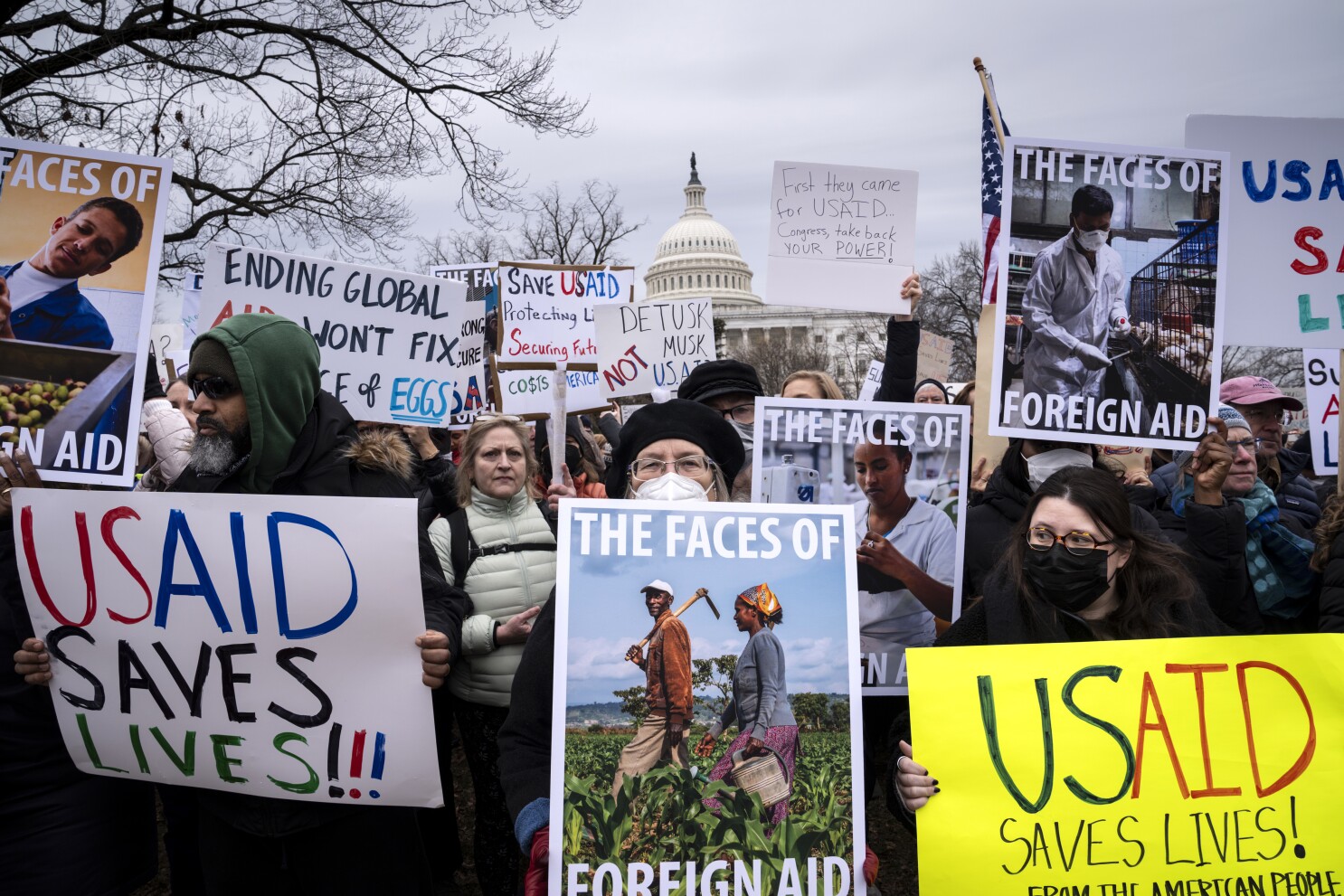
Beyond the impact of the Trump administration’s dismantling of the U.S. Agency for International Development, some 14,000 agency employees and foreign contractors as well as hundreds of thousands of people receiving aid abroad — many American businesses, farms and nonprofits— say the cutoff of U.S. money they are owed has left them struggling to pay workers and cover bills. Some face financial collapse.
U.S. organizations do billions of dollars of business with USAID and the State Department, which oversee more than $60 billion in foreign assistance. More than 80% of companies that have contracts with USAID are American, according to aid data company DevelopmentAid.
President Donald Trump stopped payment nearly overnight in a Jan. 20 executive order freezing foreign assistance. The Trump administration accused USAID’s programs of being wasteful and promoting a liberal agenda.
Here are stories of some Americans whose livelihoods have been upended:
Crop innovation work facing closures
At the University of Illinois Urbana-Champaign, a lab that works with processers, food manufacturers and seed and fertilizer companies to expand soybean usage in 31 countries, is set to close in April unless it gets a last-minute reprieve.
Peter Goldsmith, director and principal investigator at the Soybean Innovation Lab, said the group has helped open international markets to U.S. farmers and made the crop more prevalent in Africa.
For Goldsmith, that kind of steady partnership built on trade and U.S. foreign aid offers the best way to wield U.S. influence, he said.
Goldsmith said innovation labs at other land grant universities also are closing. Without them, Goldsmith worries about what will happen in the countries where they worked — what other actors may step in, or whether conflict will result.
“It’s a vacuum,” he said. “And what will fill that vacuum? It will be filled. There’s no doubt about it.”
A refugee mission is imperiled
For nonprofits working to stabilize populations and economies abroad, the United States was not only the biggest humanitarian donor but an inextricable part of the whole machinery of development and humanitarian work.
Among them, HIAS, a Jewish group aiding refugees and potential refugees, is having to shut down “almost all” of its more than 120-year-old mission.
The Maryland-based philanthropy was founded by Jews fleeing persecution in Eastern Europe. Its mission in recent decades has broadened to include keeping vulnerable people safe in their home country so they don’t have to flee, said HIAS President Mark Hetfield.
Hetfield said the first Trump administration saw the wisdom of that effort. Hias experienced some of its biggest growth during Trump’s first term as a result.
But now, Trump’s shutdown of foreign assistance severed 60% of HIAS’s funding, overnight. The group immediately started furloughs among its 2,000 direct employees, operating in 17 states and 20 countries.
The administration calls it a “suspension,” rather than a termination, Hetfield said. “But we have to stop paying our leases, stop paying our employees.”
“It’s not a suspension,” Hetfield said. “That’s a lie.”
Tracking USAID’s effectiveness may fall by the wayside
Keith Ives, a Marine veteran who fell in love with data, has a small Denver-area nonprofit that brought a numbers-crunching relentlessness to his USAID-funded mission of testing the effectiveness of the agency’s programs.
For Ives’ teams, that’s included weighing and measuring children in Ethiopia who are getting USAID support, testing whether they’re chunkier and taller than kids who aren’t. (On average they are.)
Last week, Ives was planning to tell half his full-time staff of 28 that they would be out of a job at the end of the month. Ives’ Causal Design nonprofit gets 70% of its work from USAID.
At first, “it was an obsession over how can I fix this,” said Ives, who described his anxiety in the first days of the cutoff as almost paralyzing. “There must be a magic formula. … I’m just not thinking hard enough, right?’’
Now, Ives goes through all-staff call after call, breaking bad news on the impact of USAID’s shutdown. Being transparent with them, it turned out, was the best he could do.