
The Trump administration released $5.3 billion in previously frozen foreign aid, mostly for security and counternarcotics programs, according to a list of exemptions reviewed by Reuters that included only limited humanitarian relief.
President Donald Trump ordered a 90-day pause on foreign aid shortly after taking office on January 20, halting funding for everything from programs that fight starvation and deadly diseases to providing shelters for millions of displaced people across the globe.
The freeze sparked a scramble by U.S. officials and humanitarian organizations for exemptions to keep programs going. Secretary of State Marco Rubio, who has said all foreign assistance must align with Trump’s “America First” priorities, issued waivers in late January on military aid to Israel and Egypt, the top U.S. allies in the Middle East, and for life-saving humanitarian aid, including food. The waivers meant those funds should have been allowed to be spent.
Current and former U.S. officials and aid organizations, however, say few humanitarian aid waivers have been approved. Reuters obtained a list of 243 further exceptions approved as of February 13 totaling $5.3 billion. The list provides the most comprehensive accounting of exempted funds since Trump ordered the aid freeze and reflects the White House’s desire to cut aid for programs it doesn’t consider vital to U.S. national security.
The list identifies programs that will be funded and the U.S. government office managing them. The vast majority of released funds — more than $4.1 billion — were for programs administered by the U.S. State Department’s Bureau of Political-Military affairs, which oversees arms sales and military assistance to other countries and groups.
Other exemptions were in line with Trump’s immigration crackdown and efforts to halt the flow of illicit narcotics into the U.S., including the deadly opioid fentanyl.
More than half of the programs that will be allowed to go forward are run by the State Department’s Bureau of International Narcotics and Law Enforcement Affairs, or INL, and are aimed at helping fight drug trafficking and illicit migration to the U.S., according to the list.
Those exemptions were worth $293 million and included funds for databases to track migrants, identify possible terrorists and share biometric information. A State Department spokesperson did not respond to a request for comment.
Reuters could not determine if some exemptions had been granted but were not on the list.
Trump has long railed against foreign aid, which has averaged less than 2% of total federal spending for the past 20 years, according to the nonpartisan Committee for a Responsible Federal Budget. Trump has described the U.S. “foreign aid industry” as “in many cases antithetical to American values.”
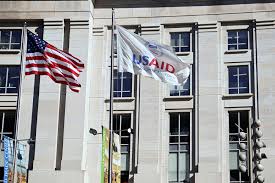
Billionaire Elon Musk’s Department of Government Efficiency has led an effort to gut the United States Agency for International Development, the main delivery mechanism for American foreign assistance and a critical tool of U.S. “soft power” for winning influence abroad.
In contrast to security-related programs, USAID programs received less than $100 million in exemptions, according to the list. That compares to roughly $40 billion in USAID programs administered annually before the freeze.
Exempted USAID programs included $78 million for non-food humanitarian assistance in Gaza, which has been devastated by war. A separate $56 million was released for the International Committee of the Red Cross related to the ceasefire deal between Israel and Hamas, the list showed.
The list did not include specific exemptions for some of the world’s worst humanitarian crises, including Sudan, Syria, Ukraine, Myanmar and Afghanistan, which means funds for those places appeared to remain stopped.