

JERUSALEM: Aid workers in the Palestinian territories told AFP they are concerned that rules recently floated by Israel could make already difficult humanitarian work “almost impossible”.
Since the war in Gaza broke out with Hamas’s October 7, 2023 attack on Israel, aid organisations have been contending with a “slippery slope” when it comes to Israeli authorities’ tolerance for their work, said one senior NGO staffer.
But after COGAT, the Israeli body responsible for overseeing Palestinian affairs, presented a plan last month for reorganising aid distribution, that slope has gotten “much steeper”, with some NGOs deeming the proposed changes unacceptable, she added.
COGAT did not respond to AFP’s request for comment.
The staffer and others interviewed requested anonymity for fear of repercussions for their operations in the occupied West Bank and the besieged Gaza Strip, where responding to the acute humanitarian crisis brought on by the war had already been a Herculean undertaking.
“The ability to deliver aid and adhere to humanitarian principles in Gaza, the access restrictions we’re facing in the West Bank… All of these things, when you put them together, you just feel like you’re watching the apocalypse,” she said.
“We basically have a fire extinguisher trying to put out a nuclear bomb.”
Supply chain control

NGOs say the Israeli body that oversees the Palestinian territories wants to impose stricter rules for aid distribution
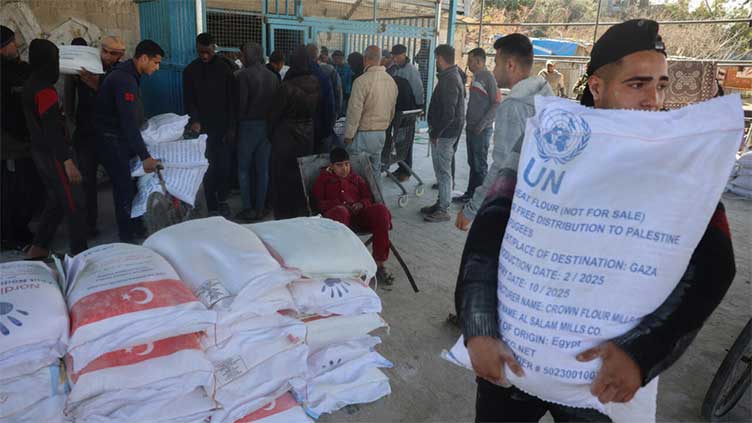
According to NGOs, COGAT presented a plan at the end of February that aims to reinforce Israeli oversight of aid by establishing logistics centres linked to the army and by enforcing tighter control over the entire humanitarian supply chain.
“Logistically, it will be almost impossible,” said one member of a medical NGO, wondering whether such organisations would be forced to declare individual recipients of various medications.
COGAT’s stated objective, according to the NGOs, is to combat looting and the misappropriation of aid by militants.
But the NGOs say they believe looting is currently marginal, and that the best way of avoiding it is to step up deliveries.
Israel, meanwhile, cut off aid deliveries to Gaza entirely early this month over an impasse with Hamas on how to proceed with a fragile ceasefire.
“The thinking (of COGAT) was that Hamas would rebuild itself thanks to humanitarian aid,” said a representative of a European NGO, “but that’s false, and humanitarian aid won’t bring them rockets or missiles.”
Israel “just wants more control over this territory”, he added.
The NGOs said COGAT did not specify when the new rules would take effect.