
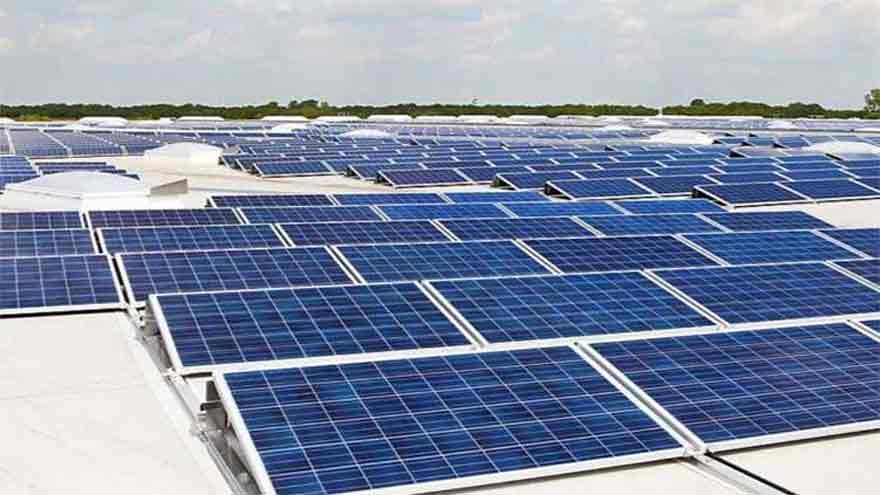
LAHORE: Solar panel system prices in Lahore have recorded a decline, providing relief to consumers looking to install solar energy systems.
The cost of systems ranging from 5 to 15 kW has dropped by up to Rs 150,000, according to reports.
A 5 kW solar system is now priced at Rs550,000, while the cost of a 7 kW system has been set at Rs625,000.
The price of a 10 kW system has been reduced to Rs900,000, and a 12 kW system is now available for Rs1,050,000. The price of a 15kW system has been fixed at Rs1,300,000.
This price reduction is expected to encourage more people to adopt solar energy solutions, contributing to a growing shift toward sustainable and renewable energy in the region.
Meanwhile, Pakistan’s rooftop solar generation will for the first time exceed power demand on the country’s electrical grid during daytime hours in some major industrial regions next year, a senior government official told Reuters.
The outlook reflects a record boom in the country’s solar panel installations in recent years that has delivered lower emissions and reduced power bills for some, but also disrupted the finances of debt-laden utilities due to a protracted decline in demand for grid-based electricity.
“Pakistan will experience negative grid-linked demand during certain daytime hours because behind-the-meter solar is offsetting grid consumption completely,” Aisha Moriani, secretary of Pakistan’s climate change ministry told Reuters on the sidelines of the COP30 climate conference in Brazil.
While regions in Europe and Australia sometimes experience negative electricity prices due to solar oversupply and low demand, Pakistan would be among the first major emerging markets where rooftop generation could exceed grid-linked demand in major areas entirely for lengthy periods.
“Negative demand” is likely in the northwestern city of Lahore, which has some of the country’s highest solar penetration, followed by Faisalabad and Sialkot, where industrial areas are driving solar adoption, she said.
Power cuts and tariff hikes have pushed Pakistan’s 250 million people to accelerate solar adoption and made it the world’s third-largest panel importer, with solar’s share in generation exceeding its neighbor China.
“Pakistan’s challenge is not whether renewable energy will grow, it is how fast the grid, regulation, and market design can evolve to keep pace,” she said.
The south Asian nation is planning to introduce new tariffs for large solar users, as well as changes to fee structures to ensure businesses with panels share equally in the costs of grid upkeep, she said.