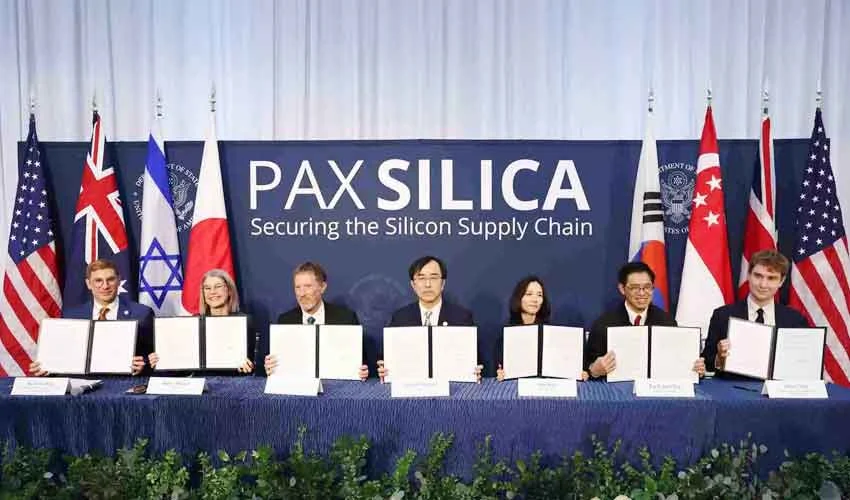

India has suffered another diplomatic setback as it was left out of the United States–led advanced technology alliance, Pax Silica, intensifying criticism that the Modi government is facing growing global isolation.
The United States has launched a new strategic coalition focused on critical minerals and advanced technology supply chains, notably without including India. The initiative, known as Pax Silica, aims to build a secure and resilient global silicon ecosystem.
Despite ongoing trade and technology talks between Washington and New Delhi, India was not invited to join the alliance, drawing attention at both diplomatic and political levels.
What Pax Silica aims to achieve
According to the US State Department, Pax Silica is designed to support an innovation-led and trusted global supply network for next-generation technologies. The initiative covers the full value chain, from critical minerals and energy inputs to advanced manufacturing, semiconductors, artificial intelligence infrastructure and logistics.
The alliance also seeks to reduce reliance on Chinese-dominated supply chains, curb what it describes as “coercive dependencies,” and safeguard materials and capabilities vital to artificial intelligence and emerging technologies.
Countries invited to first Pax Silica summit
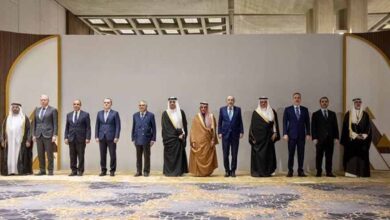
The first Pax Silica Summit will include Japan, South Korea, Singapore, the Netherlands, the United Kingdom, Israel, the United Arab Emirates and Australia. Washington has emphasized that these countries host many of the world’s most influential companies and investors driving the global AI and semiconductor industries.
India’s absence from this core group has raised questions about its standing in the global advanced technology ecosystem.
Opp links exclusion to recent military setback
India’s opposition has seized on the development, calling it a major embarrassment for the Modi government. According to The Indian Express, opposition leaders have linked India’s exclusion to the humiliating defeat at the hands of Pakistan in May.
Senior opposition leader Jairam Ramesh said the setback against Pakistan was a key reason behind India’s growing global humiliation. He argued that India’s withdrawal or exclusion from an important US-led alliance after May 10 was “not surprising.”
Opposition parties have described the exit from Pax Silica as an extraordinary decline in India’s global standing under Prime Minister Narendra Modi. Critics say that despite claims of strong personal ties between Modi and US President Donald Trump, India has failed to secure a place in a strategically crucial alliance.
They argue the development exposes the limits of India’s diplomatic outreach and global influence.
Contrast with recent India-US cooperation
India’s absence from Pax Silica is particularly striking given recent cooperation between New Delhi and Washington. In 2024, the two countries signed a memorandum of understanding on critical minerals supply chains, aimed at strengthening resilience by leveraging complementary strengths.
This agreement, along with the Initiative on Critical and Emerging Technologies (iCET), was seen as evidence of deepening collaboration in technology and clean energy sectors.
India’s role in advanced AI supply chains
However, India’s exclusion from a forum centred on the most advanced players in the AI and semiconductor ecosystem suggests that New Delhi may not yet be viewed as a full-spectrum partner in the highest end of the global AI supply chain.
Analysts say the move highlights concerns about India’s readiness and capacity to participate at the cutting edge of advanced manufacturing and semiconductor technologies.
As of now, there has been no immediate response from Indian officials regarding the country’s exclusion from Pax Silica. The silence has further fueled political criticism and debate over India’s foreign policy direction.