
Being a frequent globe trotter for the last many decades, I know the contribution well-planned tourism facilities in any country can make to the exchequer.
Let me first go through a widely-acknowledged definition of the word CULTURE that was adopted by the World Conference on Cultural Policies at Mexico in 1982, according to which culture is the whole complex of distinctive, spiritual, material, intellectual and emotional features that characterize a society or group. It includes not only arts and letters, but also modes of life, the fundamental rights of the human being, value systems, traditions and beliefs. This Mexico moot also affirmed that balanced development can only be ensured by making cultural factors an integral part of strategies designed to achieve it. Having fully agreed with this definition of CULTURE, I would like to add some more input to substantiate it. Mind you, it is initially the tourism industry which has to develop in any country and then comes foreign investment. 1 can name dozens of countries around the world like Austria, Monaco, Switzerland, Malta, Italy, Austria, Luxembourg and Singapore etc which first attracted tourists, impressed them with their hospitality and natural scenic beauty and once tourists themselves became their biggest advertising tools, they went out attracting foreign capital and gave a boost to their banking industry.
I need not go into details of what else most countries including India do today to attract tourists, but I know one thing that if our foreign missions make it a point on agenda that they have to hunt tourists in their respective stations of postings, they can do it very easily. Millions of Americans, Japanese and Europeans set sails for unseen mysteries and wonders every year. I agree law and order in Pakistan along with a few other social taboos and stigmas may have been a hindrance in attracting tourists but have we ever tried as sincerely as we should have?
Have our diplomats ever held seminars or televised documentaries about the marvellous myth and mystique shrouding Pakistan’s culture, its fabulous mountain ranges, its breath-taking scenery and its versatile weather conditions etc, the way most foreign airlines, diplomatic missions and travel associations do?
We normally tend to make comparisons with neighbouring India. May I just give you one small example in this context. If you go to Amsterdam’s City Centre, where hundreds of thousands of tourists gather daily you will love to see the way the Indian Airlines staff guide anyone who walks in or peeps into their office. They do not restrict their services to informing a traveler about a return fare to Delhi or Mumbai but will tell you what else you can see, in how much money and are eager to furnish all travel details.
On the contrary, the PIA offices, just a mile away, are a lot more conservative in convincing a foreign tourist at all he or she walks in. I do not know whether that is part of our attitude towards things or lack of knowledge on part of our national carrier’s staffers about what their country has to offer. Our diplomats, on the other hand, are least pushed in absence of any targets being assigned to them in this regard.
I again agree that the negative propaganda aired by foreign media against Pakistan may have accounted a lot for the snail-paced development of tourism in this country but have we ever tried to dispel this impression? Have we ever held a debate on the fact that if Pakistan is unsafe, you can also be mugged and robbed anywhere and at anytime in London, New York, Paris, Amsterdam or Rome?
Have we ever debated on the fact that cab drivers or road-side motels anywhere can charge more from a visiting tourist something called the TOURIST PRICE.
Anyhow, what pleases me personally is yet another fact that the influx of tourists from Europe into Pakistan, despite all the deterring factors, has increased.
Believe me, keeping in view the vast untapped niches of this sector till date. I see no reason why these figures in tens of millions cannot be converted into hundreds of millions.
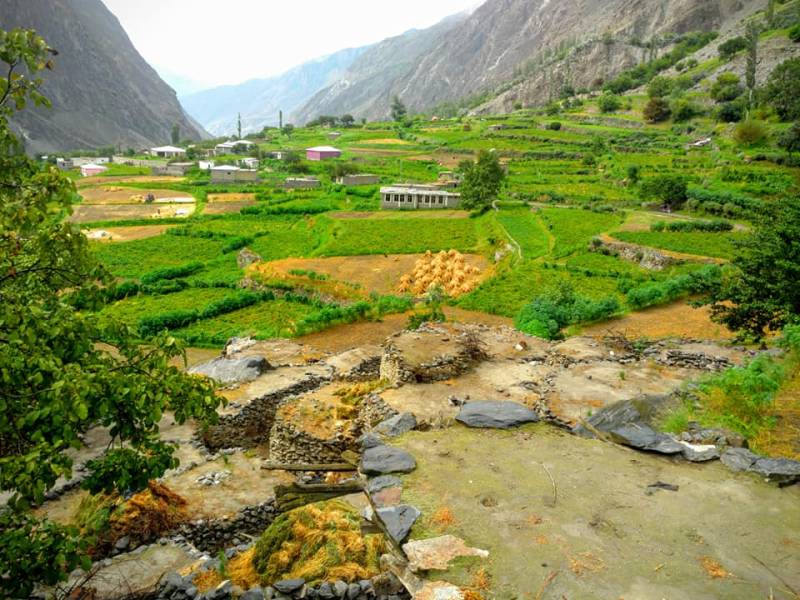
Hindus, Buddhists and Sikhs can all trace roots of their ancestors in Pakistan. While Hindus can visit some of their prominent temples at Katas, Malot and Balochistan etc, Buddhists can find a lot of religious and cultural heritage at Taxila, Peshawar, Charsadha, Swat, Gilgit, Hunza and Skardu.
Similarly, Sikh Jatthas and pilgrims in their individual capacities can visit Gurudwaras at Nankana Sahib, Kartarpur, Rohri Sahib, Hassan Abdal and Punja Sahib. Despite quite a few efforts of late to protect and preserve these historic monuments of great interest to both minorities and students of history, one finds a lot of room for improvement. Quality hotels and restaurants adjacent to these sites are very rare and then sometimes it becomes perilous to travel to a few of these places. We need to realise what a tourist needs when out on a vacation. We need to make him feel at home through adequate security and facilities. Excellent tourist guides, fluent in a few major languages and proficient in history, should be there in good numbers to greet these tourists. A guide or two, hired at dismal perks, cannot deliver the job as it should be done.
Talking about flora and fauna, the Siberian Ibex and Snow Leopard can be found at Bar Valley in Gilgit, Green Turtle and Olive Ridley at Karachi Coast, Brown Bears at Deosai Plains of Skardu, Blind Dolphin at Taunsa Barrage on Rive Indus and innumerable bird species at Karakoram, Keenjhar and Heleji. Thus, animal lovers have a whole lot of wildlife to see in the treacherous and winding valleys of Pakistan, with lovely adventure awaiting those who only fancy seeing these creatures in Africa and elsewhere. More than half a dozen museums in this country house some of the most unique and rare collections of handicrafts, coins, images, calligraphy, miniatures and manuscripts.
For instance, the National Museum of Pakistan at Karachi is famous for its collections ranging from Palaeolithic Implants from Soan Valley, Antiques from Amri, Serai Khola, Kot Diji, Meonjodaro, Harappa, and Chandudarp. Jhukar, Buddhist and Ghandhara eras. Hindu Sculptures and a collection of coins from 6 BC to date can also be found at this museum.
At the Harappa and Moenjodaro museums, one can find all sorts of antiques unearthed from these prehistoric sites. At the Taxila Museum, tourists can be stunned to witness Ghandhara sculptures in stone, gold and silver, besides ornaments such as household utensils and pottery.
At the Lahore Fort museum, paintings dating back to the Mughal era, coins and carvings etc can occupy any visitor interested in knowing about this splendid dynasty.
Similarly, the Sikh Gallery in Lahore, the Peshawar Museum and the Swat Museum can be lifetime memories for both Sikhs and Buddhists keen to know about their forefathers and the eras they led their lives in.
Safari trips from Karachi to Kashmir ensure visits to tombs of all MuslimSufi saints who had dedicated their lives to spread the light and message of Islam despite all odds. They were the ones who accepted no throne or crown despite offers and they were the ones paid respect by rulers of their time. Hundreds of years have passed by and pilgrims and followers still continue to visit these tombs in large numbers. Tens of thousands of needy and deserving people can find free food offered round the clock by followers at these tombs. Rich Muslim culture and religious rituals thus await tourists here.
Pakistan is a treasure house of diverse cultural traditions and happens to be a custodian of a range of exceptional cultural property spanning over thousands of years.
Pakistan needs to frame a national policy on culture and cultural heritage, which includes the identification and mapping of all available cultural resources, both tangible and intangible. We will have to involve communities and the private sector to safeguard these treasures. A data collection programme should be launched. Then we need to identify significant themes related to the nation as a whole, provinces and sub-regions of the country. The government should act as a facilitator to include provisions for a legislative framework and financial support for public/private partnerships in this context.
We should utilise the 9000 railway stations across the country for awareness, preservation and tourism promotion. Cultural posters with a précis of relevant description should be displayed both at the railway platforms and inside the trains.
Group travel should be given all concessions, and comprehensive documentaries about the country’s heritage should be shown at all international PLA flights.
Special shows should be held in all important cities of the world. I still fail to understand why tourism should not be tax-free. Why shouldn’t we advertise it on the web that tourists here do not have to pay taxes? We still have to introduce and market a product at affordable rates. This product has immense potential so why not think on a long-term basis. Foreign tourists in Pakistan during 1999 went out paying taxes to the tune of $ 58 million, a figure that pains me. This figure can run in billions if foreigners start taking it as a hobby to visit Pakistan during vacation every year, the way we plan tours to Europe and America. The habit of touring Pakistan has to be inculcated first. Tourists should be addicted with this passion of hiking in our Northern Areas or going for skiing or trekking amidst extremely friendly conditions. Transport holds the key though. Who doesn’t know Pakistan is the house of the world’s second-highest peak that is K-2?
K-2 alone should have earned billions for us by now. So have we not lacked on this front?
Having interviewed so many foreign tourists hailing from every sphere of life during my journalistic career spanning over 37 years now, I have come to the conclusion that they were enthralled after coming across folk which still lives in nothing less than stone age. Their traditions, cultures, clothes, rituals and practices-all made these tourists spend days and weeks in the remotest of areas sans basic amenities of life. If channels like National Geographic can show dozens of such documentaries about Africa, South America and India, why shouldn’t Pakistan find a place with them. We need to contact international expedition organizers and apprise them of what Pakistan houses. But again, our foreign envoys will have to play a pivotal role here again. The government would do well to arrange a global conference of international travel agents and personnel representing a few dozen carriers. These people should be invited at state expense and be taken on a 10-day long guided tour across the country on a chartered plane. You don’t have to do it regularly and it won’t cost in billions. This plan has the potential to reap unprecedented dividends, even beyond our imagination. This investment vis-à-vis the projected potential is highly dismal.
We need to ponder as to why we could not attract a far greater number of tourists in these 57 years despite being gifted with all natural resources Switzerland or other countries housing the Alps possess. The areas where we lack badly are those in control of a human. Build up hotels, carpet roads, ensure translators/guides everywhere, make food arrangements in the line with the appetite of a foreigner, give him total peace, make these resorts secure, ensure the provision of heaters and air-conditioners at every resort, sell products at the same rate as they are being sold to a Pakistani and make local populations realize the fact that guiding/facilitating a foreigner without intention of a reward for services is their national duty. Many nations have done it successfully. Once this industry is established, taxes can be imposed and some bucks from these tourists can be earned but this is not the time
We need both tourists and a wonderful image as a nation, if we are to expect tourists. Tourism is more fragile than glass in my opinion. Let me assure you that tourism is not a religious, social or moral compulsion, therefore, those out with sleeping bags at their backs need no hassle but all comfort. Instead of spelling the rhetoric, time is ripe we announce with a bang that we offer the best on Earth for a tourist at the cheapest package.
With Food and Agriculture Organisation (FAO), United Nations Education, Scientific and Cultural Organisation (UNESCO), United Nations Development Programme (UNDP) and International Union for Conservation of Nature (IUCN) actively collaborating with Pakistan on the tourism front, I am optimistic that the goal may be uphill but not impossible.