
The World Bank Group (WBG) has classified 40% of the world’s economies in the high-income category based on Gross National Income (GNI), i.e., >13,935 USD per capita. These economies are mostly located in Europe; North America; some countries of the Asian region, such as the Russian Federation, Japan, South Korea, the Kingdom of Saudi Arabia, Oman, and the State of Israel; Australia and New Zealand from the Pacific region; and Chile, Uruguay, Guyana, Costa Rica, and Panama in South America. About 25% of world economies are categorized into the upper-middle income group (4,496–13,935 USD per capita), mostly located in South America, the Pacific region, the Middle East, and some economies of Asia, such as Turkey, Iran, Turkmenistan, Kazakhstan, Mongolia, and China, and the African region, such as Algeria, Libya, Gabon, Botswana, and South Africa. Pakistan, including South and East Asian economies and Eastern and Southern African economies, is categorized into the low-middle income group (1,136–4,495 USD per capita), which represents about 23% of the world’s economies. The remaining 12% are categorized as low-income (≤ 1,135 USD per capita) and are located in Central and Eastern Africa, with some in Asia, such as North Korea, Syria, and Afghanistan.
Furthermore, the world economies are also categorized into mega (W), macro (X), meso (Y), micro (Z), and nano (I) economies based on parameters such as population size and cultural diversity, geostrategic location, natural and economic resources, technology and innovation, democratic system and stability, and military potential. Currently, Pakistan falls in the Y category, reflecting a meso-level economic structure with strong potential to transform into a mega economy (W category) with the interplay of other economies in a phased manner over 15 years (2040) by following the highlighted critical development paths.

Transition from Meso to Macro Economy (5–7 Years): To tackle fragmented clusters in economic modules, informal market influence, inconsistent institutional cycles, and fluctuations in influence flows as a result of external shocks and domestic instability, a shift is needed to shape consolidated national power through fiscal sovereignty by expanding the tax net and reducing reliance on short-term borrowing. Pakistan’s working-age population is approximately 54%, of which young people are reported at about 20% (ages 15–24). Youth productivity can be enhanced by introducing reforms in the basic education system with standardized systems, investing in human capital through skills-based training to tackle emerging challenges, and fostering inclusive cultural integration to transform this diversity into economic strength. The geostrategic location of Pakistan emphasizes shifting from a theoretical advantage to a practical economic asset by increasing regional relevance with outward influence. This can be achieved by enhancing trade logistics and connectivity, along with better border management. Special focus is required to strengthen the domestic economy with the transition of natural and economic resources into value-added industries. Natural resource autonomy can be achieved through smart agricultural practices, scaling renewable energy, and modernization of mineral governance. Internal coherence and weight of influence flow can be enhanced by expanding digital infrastructure with an AI-driven administrative system, along with tech entrepreneurship. Furthermore, strengthening the democratic system and political stability milestone requires focusing more on a predictable policy cycle, institutional transparency, depoliticized governance coupled with accountability, and strong military potential. Institutional strengthening requires civil service for merit-based promotions, a reduction in rent-seeking through digital governance, strengthening local governments through bottom-up stability, and transparent and verifiable national data sets. These reforms can support shifting the country from a reactive, medium-impact “Y” economy towards a stable and high-impact macroeconomic “X” state capable of shaping regional outcomes.
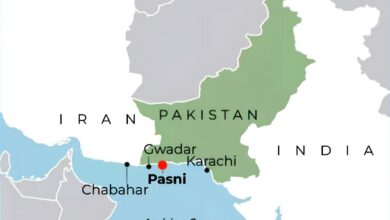
Transition from Macro to Mega Economy (8–15 Years): Transition towards a mega-level economy “W” requires consolidating national strength and expanding cultural diplomacy, labor integration, collaboration, and innovation ecosystem across the Asian region with the support of a vibrant, diverse young population as a geopolitical asset. Pakistan’s geostrategic location, which was activated in the macro phase, needs to be converted into a full regional hub by focusing on logistics networks, energy corridors, and digital connectivity with financial flows linking to other regions, i.e., Central and East Asia, the Middle East, the Indian Ocean, Africa, Europe, and North and South America. Regional trade agreements with a leading position on climate, energy, and water diplomacy in South Asia will elevate Pakistan’s role as a strategic player in regional development and politics. This approach will position Pakistan as a stabilizing connector “star node” for multi-directional and high-weight influence channels to gain regional power. Mineral-based value chains, advanced manufacturing, and high-tech services require a focus on achieving export sophistication from a sustainable utilization of natural and economic resources. AI-driven research, remote sensing, cybersecurity capabilities, digital governance exports, and resilient technological innovation are pathways to attract foreign investment with talent to support Pakistan’s positioning as a global player in the technology ecosystem. Here, democratic maturity is essential to ensure long-term political stability, consistency in policy, institutional continuity, and rule-based governance to sustain strategic influence beyond Pakistan’s geographic borders. Our military potential has strategic capability to support and negotiate conflict resolution and regional peace with a tactical approach, such as Nash Equilibrium, to further gain strategic importance as a regional stabilizer “star node,” a transformative central hub in Asia. This approach will contribute to building national capacity to shape norms, mediate regional conflicts, and influence global policy directions in our national interest, making Pakistan a “W” economy.
This proposed trajectory supports aligning Pakistan’s realistic progression and structural transformation from meso-level potential to mega-level systemic leadership in Asia.