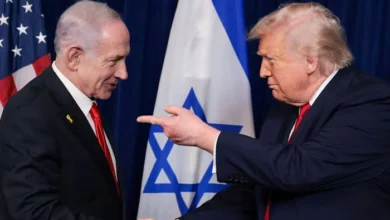

Qatar, though a small Arab state, has established itself as a significant diplomatic and economic force, with Doha as its capital. Under the leadership of Amir Sheikh Tamim bin Hamad Al Thani, Qatar has gained global recognition for mediating major conflicts, including the 2021 Afghan Agreement, the Israel-Palestine dispute, tensions between Pakistan and Afghanistan as well as earlier roles in Yemen, Lebanon, Syria, Sudan, Chad and Eritrea. Despite challenges, including tensions with Israel, Qatar’s successful mediation policies highlight its unique influence and commitment to regional stability, strengthened by active engagement in the Arab League, the United Nations and the Organization of Islamic Cooperation.
Qatar’s economy is robust and capable of facing various challenges. The annual per capita income in Qatar exceeds $122,000, surpassing that of other Gulf nations as well as the per capita incomes in the United States and Singapore. The situation we observe in Qatar today is a far cry from what it was in the past. Just a few years ago, Qatar was primarily a desert. The question arises: how did Qatar, once a poor country just a few decades ago, become one of the wealthiest nations in the region? Oil was discovered in Qatar in 1940, and by the 1960s, oil extraction was flourishing. It was after this discovery that circumstances in Qatar began to change gradually. In 1970, the Shell Oil Company discovered the North Field, the largest natural gas treasure in the country. When Hamad bin Khalifa Al Thani took power in 1995, he focused all his efforts on natural gas, knowing its potential to transform Qatar’s fortunes. As a result, today, Qatar is the world’s largest gas supplier, earning billions of dollars annually by providing gas to major countries.
Due to the ongoing Russia-Ukraine war and the reduction of gas supplies to Europe from Russia, the demand for Qatari gas has increased by 10%. European nations are now looking to Qatar for gas imports, further strengthening the Qatari economy. According to Gulf News, Qatar’s projected income for the 2025 budget is estimated at 197 billion Qatari Rials, with 154 billion Rials coming solely from oil and gas. Qatar’s greatest strength lies in its stable economic system. According to a Qatari newspaper, the assets of the Qatar Investment Authority exceed $500 billion, securing its significant position in the region. There is no doubt that Qatar has gained influence in global markets through its energy investments, reflecting improvements in revenue from this sector and continuous growth. Furthermore, maintaining discipline is a crucial pillar of better ratings, with the Qatari Government consistently working to enhance human resources efficiency, strengthen financial reserves and control expenditures. With low energy prices and a dynamic economy, Qatar offers tremendous investment opportunities in sectors like energy and real estate.
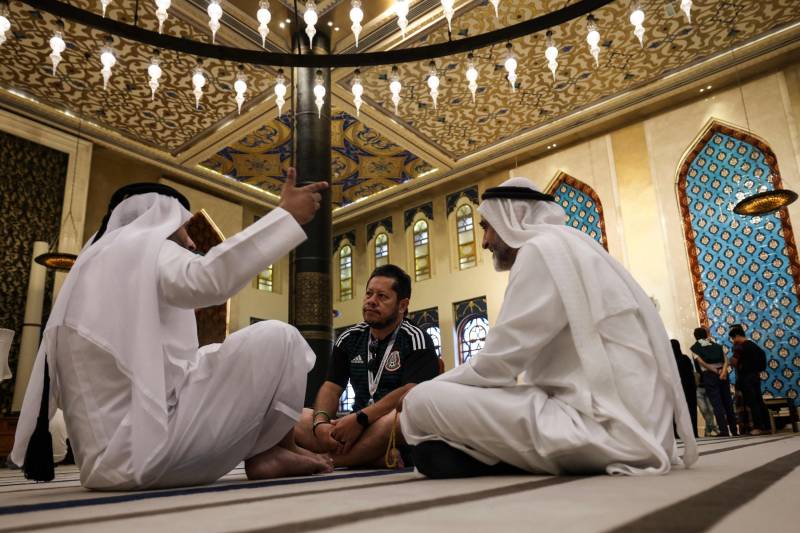
Currently, natural gas expansion is a major driver of the economy in Qatar. The country is well-positioned to assist the world in transitioning to a green economy through its gas reserves. Qatar has made significant investments in sports, including major investments in France’s largest football club, which features world-renowned players like Messi and Neymar. Hosting the 22nd FIFA World Cup in November 2022, Qatar lifted the pride of the Muslim Ummah and demonstrated to Europe that, as a Muslim state, it is a protector of Islamic values, culture and civilization. For this grand sporting event, Qatar prepared state-of-the-art football stadiums equipped with the latest technology and facilities. In addition, Qatar has had the honour of hosting numerous global events, including the Asian Games in 2006.
Qatar has launched the largest Arab media network in the world known as Al Jazeera. In the field of knowledge and research, Qatar is also achieving remarkable success. Under the National Vision 2030, Qatar is implementing multiple programs to empower women across various sectors. It is impossible to discuss Qatari women without mentioning Sheikha Moza bint Nasser, who has played a key role in highlighting and advancing the status of Qatari women. Renowned mountaineer Sheikha Asma Al Thani has successfully scaled Naga Parbat, the ninth-highest peak in the world, exemplifying the progress of women in Qatar. Under Vision 2030, Qatar has also solidified its position as a leading global tourist destination. Official Qatari statistics indicate that the tourism sector contributed 55 billion Rials to the country’s GDP, which is a 14% increase compared to the previous year and accounts for eight percent of total economic output. By 2025, the number of hotels in Qatar is expected to increase by 71%, providing over 286,000 jobs in this industry.
Qatar has established long-standing, sustainable and multifaceted relations with Pakistan. This August, Qatar reiterated its commitment to invest $3 billion in Pakistan. On the occasion of Qatar’s National Day, celebrated annually on December 18, this writer extends his congratulations to the Amir of Qatar. It is hoped that under the leadership of Amir Sheikh Tamim bin Hamad Al Thani, Qatar will continue to play a significant role for the betterment of the Muslim Ummah and in promoting peace in the region. The Qatari Ambassador to Pakistan, Ali Mubarak Ali Isa Al-Khater, expressed happiness over Prime Minister Shehbaz Sharif’s participation in the National Day ceremony. Cooperation between Qatar and Pakistan continues in various sectors and Prime Minister Shehbaz Sharif’s participation in the National Day ceremony reflects the bilateral collaboration and close relations between the two countries.