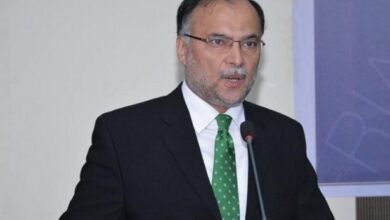
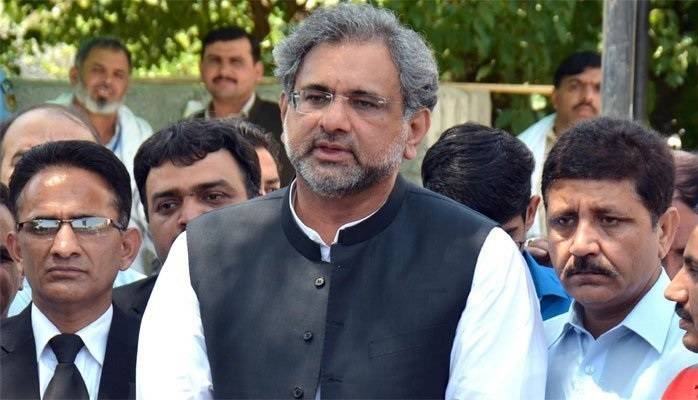

Former prime minister Shahid Khaqan Abbasi on Wednesday said that all segments of society share responsibility for Pakistan’s current political and economic crisis, stressing that the absence of rule of law has directly damaged the country’s economy.
Speaking on the prevailing situation, Abbasi said the country would not move forward unless all stakeholders sit together to find a solution. “Until everyone sits down, the situation will not improve,” he said, adding that dialogue was the only way out of the ongoing instability.
He criticized what he described as decades of “hybrid governance,” stating that such arrangements have existed in the country for nearly 60 years. Abbasi remarked that political engineering has distorted democratic norms, contributing to long-term institutional weakness. He emphasized that the issue facing the country was not about the release of any individual leader, including the founding chairman of a political party, but about systemic failures.
Highlighting the importance of overseas Pakistanis, Abbasi noted that expatriates sent nearly $38 billion in remittances last year, underscoring their continued trust in the country despite internal challenges. However, he warned that economic contributions alone could not compensate for governance failures.
Abbasi called for a comprehensive national dialogue involving politicians, the military, the judiciary, and the business community. “Politicians, army, judges, businessmen — everyone will have to sit down and talk,” he said, adding that while all institutions claim patriotism, the country’s deteriorating conditions tell a different story.
He further alleged that Pakistan remains under the control of a small elite and blamed the current crisis on leadership failures. “Today’s failure is due to the leadership,” he said, accusing those in power of distorting the Constitution, which he said was at the root of many of the country’s problems.
Abbasi urged a serious reassessment of national priorities and governance structures, warning that without genuine reform and consensus, the country’s political and economic challenges would continue to deepen.