
India has long maintained that the Shaksgam Valley belongs to it. An Indian foreign ministry spokesperson reiterated on January 9 that New Delhi does not recognize the 1963 China-Pakistan boundary agreement. India has consistently called the agreement “illegal and invalid.” The spokesperson also said that India does not recognize the China-Pakistan Economic Corridor (CPEC).
According to India, the entire union territories of Jammu and Kashmir and Ladakh are integral and inalienable parts of the country. New Delhi has repeatedly protested attempts to alter the ground reality in Shaksgam Valley. The Indian spokesperson added that these concerns have been formally communicated to both Pakistan and China multiple times.
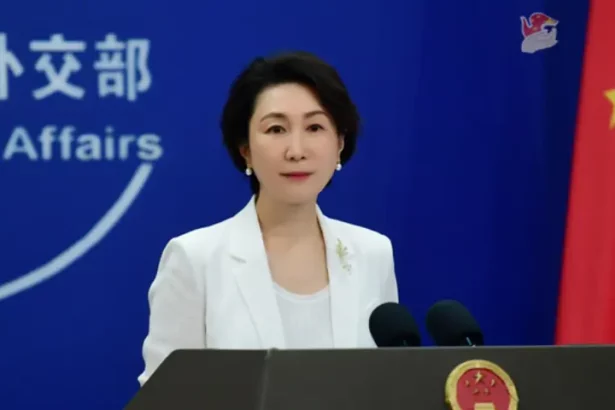
In response, Mao Ning said that the China-Pakistan boundary agreement was signed in the 1960s and legally delimited the border between the two countries. She said the agreement reflects the sovereign rights of China and Pakistan. Mao added that the China-Pakistan Economic Corridor is an economic cooperation initiative designed to improve local socio-economic development and enhance the livelihoods of people in the region.
Mao also stressed that neither the boundary agreement nor CPEC affects China’s position on Kashmir. She reiterated that China’s stance on the issue remains unchanged.
The dispute over Shaksgam Valley is part of a larger pattern of India-China border tensions. In 2020, a military clash along the Himalayan border left 20 Indian soldiers and four Chinese soldiers dead. Following this, both countries worked to reduce tensions. In 2024, they signed a milestone pact aimed at lowering military confrontation. Since then, relations have improved slightly, including resumed direct flights and growing trade and investment.
Despite these efforts, territorial disputes continue to flare. China and India also clash over Arunachal Pradesh. Beijing calls it South Tibet and claims it as part of Chinese territory. India rejects this claim. The renaming of places in the northeastern state by China has repeatedly drawn strong objections from New Delhi.
Analysts say that while China and India have taken steps to improve bilateral ties, disputes like Shaksgam Valley and Arunachal Pradesh show that border tensions remain unresolved. Both sides continue to monitor the region closely, and diplomatic exchanges are ongoing to prevent escalation.