
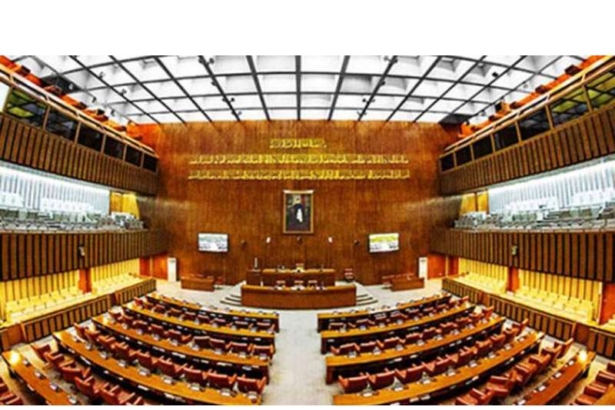

Islamabad: Pakistan’s push to become a “Digital Nation” came under parliamentary fire after the head of the Pakistan Digital Authority openly acknowledged that the country currently lacks the legal tools to stop data theft, dark web sales, online abuse, and misuse of artificial intelligence. The admission, made during a Senate Standing Committee on Information Technology and Telecommunication session, triggered concern that ambitious digital reforms are racing ahead while citizen protection remains dangerously weak.
The exchange unfolded when lawmakers questioned how the state intends to protect personal data, regulate online platforms, and shield minors from harmful digital content in the absence of enforceable data protection law. Senators warned that while new digital bodies are being created, citizens, journalists, and politicians continue to face hacking, harassment, and surveillance with little recourse.
Dr. Sohail Munir, Chairman of the Pakistan Digital Authority, told the committee that his institution is responsible for data governance, not data protection, drawing a clear line between managing how data is shared within government systems and protecting fundamental privacy rights. He conceded that there are serious gaps in the statutory framework, admitting that authorities are currently constrained when it comes to prosecuting individuals involved in selling personal data on the dark web.
The admission drew an immediate reaction from the committee chair, Palwasha Mohammad Zai Khan, who rejected the notion that citizens are experiencing “delightful digital interactions.” She said that the digital reality for lawmakers and ordinary people alike is harassment, abuse, and compromised accounts, stressing that unchecked digital expansion without protection has made users more vulnerable, not empowered.
At the center of the government’s digital architecture is a powerful supra ministerial setup led by the Prime Minister and provincial chief ministers, with major data custodians such as National Database and Registration Authority, the State Bank, FBR, SECP, and PTA involved in steering national digital strategy. The Pakistan Digital Authority functions as the executing arm, tasked with building the country’s Digital Public Infrastructure, including digital identity verification, instant payment systems, data exchange mechanisms, and a consent based architecture.
Dr. Munir argued that the core philosophy of the new system is that personal data belongs to the citizen, not the state or private platforms. He explained that under the proposed “consent layer,” institutions would only verify required attributes rather than collect full identity records. However, senators pointed out that such safeguards remain theoretical as long as there is no enforceable data protection law to punish violations or deter abuse.
The committee also clashed with officials over artificial intelligence governance. While the Pakistan Digital Authority Act assigns PDA a supervisory role over AI, lawmakers were told that the Ministry of IT had previously advised against immediate regulation, citing the early stage of AI development in Pakistan. Dr. Munir said the authority is instead adopting an international supervisory model and working with sectoral regulators to manage high risk AI use cases, particularly in sensitive areas such as health and genomic data. Senators warned that delaying regulation could allow irreversible harm before safeguards are in place.
The discussion exposed a deeper institutional tension: an executive eager to roll out digital systems and infrastructure, and a legislature increasingly alarmed that laws protecting citizens are lagging far behind technology. Committee members cautioned that without parliamentary backing, especially after devolution of powers to provinces, even the most sophisticated digital frameworks could collapse under jurisdictional disputes and enforcement failures.
Despite assurances of executive support, lawmakers made it clear that the Pakistan Digital Authority’s credibility will depend not on vision statements or master plans, but on whether Parliament moves quickly to plug the legal void around data protection, online abuse, and AI misuse. Until then, senators warned, Pakistan’s digital future risks becoming a system where data flows freely but accountability does not.