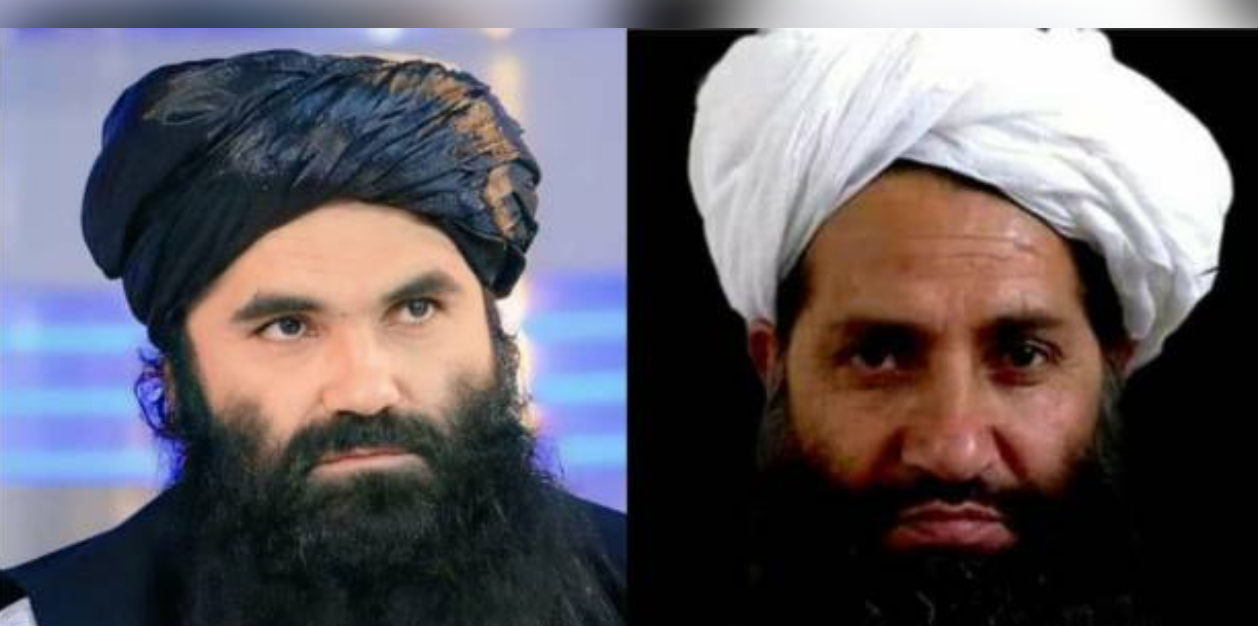

The internal strife between Afghan Taliban has become more clear as recent reports are suggesting that differences between Kabul and Kandhar factions have widened, British media reported.
According to a report released by British Broadcasting Corporation (BBC), in a leaked audio clip, Taliban leader Haibatullah Akhundzada can be heard warning Taliban leadership that internal divisions could lead to the end of the Islamic Emirate.
According to the BBC, Kandahar group is led by Haibatullah Akhundzada, who advocates a hardline Islamic emirate.
Haibatullah Akhundzada vision a system that is cut off from the modern world, where religious figures maintain complete control over society. This faction strongly opposes women’s education and employment, and modern technology, especially the Internet, is considered a threat to Islamic values.
Akhundzada has made Kandahar his center of power and has taken several key decision, such as the distribution of security forces and weapons without seeking the consent of Kabul group.
In contrast, Kabul group is considered relatively pragmatic which include powerful leaders such as Interior Minister Sirajuddin Haqqani, Defense Minister Mullah Yaqoob and Deputy Prime Minister Abdul Ghani Baradar.
Kabul Group of Afghan Taliban wants a Gulf-like model in Afghanistan that is economically active and has ties with the international community along with an Islamic identity. These leaders opine that it is not possible to run the country without trade, diplomacy, and state governance. This is why this group also supports girls’ education through modern technology and limited scope.
The BBC report also states that Haibatullah Akhundzada’s role has changed significantly over time. In 2016, he was elected as a religious scholar who could create consensus between different factions, but after coming to power, he became an authoritarian ruler.
The report, citing sources, said that Akunzada speaks little during the meetings, hides his face in public but he has gradually stripped influential leaders like Siraj Haqqani and Mullah Baradar of their powers, and implemented decisions like women’s education without consulting the Kabul cabinet.
On the other hand, the Kabul leadership has stepped up efforts to improve its public image. In particular, Sirajuddin Haqqani, once on the FBI’s most wanted list, has now begun to portray himself as a state leader.
After 2024, he gave interviews to Western media and used sources such as TV and social media to gain popularity among young Afghans. According to the BBC, internal Taliban differences reached a decisive turning point in September 2025 when an order was issued from Kandahar to shut down internet and phone services throughout the country.