
Pakistan and Saudi Arabia have reaffirmed their commitment to further deepen and expand bilateral economic cooperation, with a focus on mutually beneficial investment and trade opportunities.
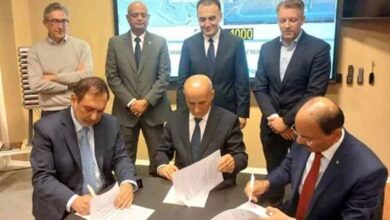
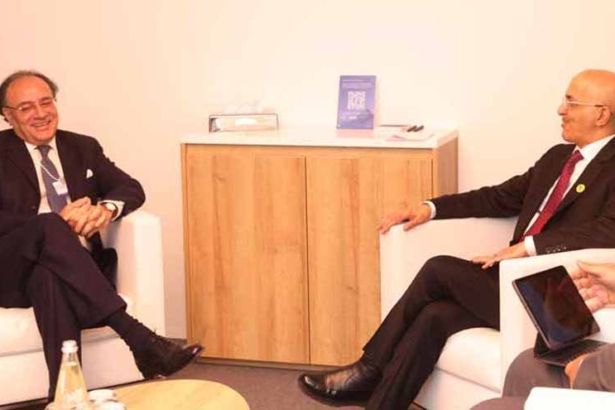
The understanding was reached during a meeting between Pakistan’s Federal Minister for Finance and Revenue, Senator Muhammad Aurangzeb, and Saudi Arabia’s Minister of Finance, Mohammed Aljadaan, held on the sidelines of the World Economic Forum (WEF) Annual Meeting 2026 in Davos.
During the discussion, the Saudi finance minister expressed satisfaction over Pakistan’s recent economic performance and reform measures, noting positive developments in key macroeconomic indicators. He appreciated the steps taken by Pakistan to stabilize the economy and restore investor confidence.
Senator Muhammad Aurangzeb thanked Saudi Arabia and its leadership for their continued and unwavering support to Pakistan, describing the bilateral relationship as deep-rooted, time-tested, and based on strong fraternal ties. He emphasized that Saudi Arabia has remained a reliable partner in Pakistan’s economic journey, particularly during challenging periods.
Briefing his Saudi counterpart on Pakistan’s economic outlook, the finance minister stated that the country’s economy was firmly on a path of stabilization and gradual growth. He highlighted improved macroeconomic fundamentals, including a visible recovery in the capital markets, where more than 120,000 new investors have recently entered, reflecting renewed confidence in Pakistan’s economic prospects.
Aurangzeb also pointed out that interest rates had begun to decline, while underscoring the independence of the State Bank of Pakistan in conducting monetary policy in line with economic conditions. He noted that economic growth stood at 3.1 percent in the previous fiscal year and further accelerated to 3.7 percent in the first quarter of the current fiscal year.
The finance minister further underlined the crucial role of overseas Pakistanis in supporting economic stability, stating that workers’ remittances were expected to rise from approximately $38 billion last year to over $41 billion in the current year.
Highlighting future priorities, Aurangzeb said the government was actively working to attract greater foreign direct investment, particularly in high-potential sectors such as minerals and mining, agriculture, and other productive industries with strong export capacity and broad-based socioeconomic benefits.