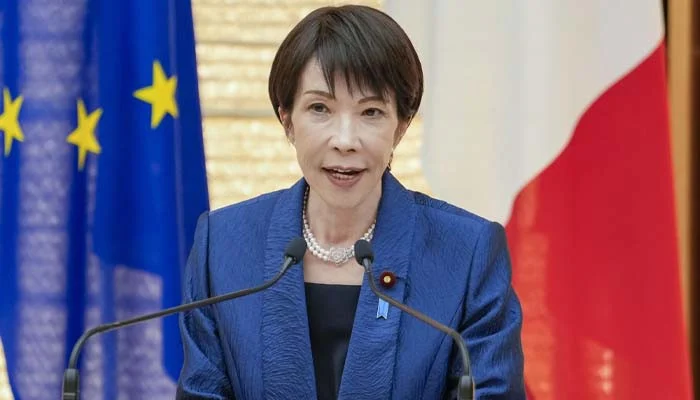

TOKYO: Japan’s first female prime minister, Sanae Takaichi, has dissolved the lower house, called for snap elections on February 8, just three months into her tenure. She said to journalists that now it was up to the voters to decide whether she stays on as prime minister or not.
International outlets report the move aims to secure a parliamentary majority capable of pushing through her main priorities. “To carry out economic reforms, recalibrate defense policies, and tighten immigration laws, you need a solid majority,” she said.
Sanae Takaichi framed the gamble as a plebiscite on her political legitimacy and called for a direct mandate to firm up her government. The campaign for all 465 lower-house seats has now entered its final 12 days.
During the 2024 cycle, the leading coalition had only a slim majority in the lower house, and there was no outright government majority in the upper house, which stalled legislation. Internal tensions and diverging interests within the coalition further fueled the gridlock.

Recently, Takaichi joined forces with the more-right-wing Japan Innovation Party after splitting from her longtime coalition partner Komeito. The two blocs share common ground on expanding the military, restricting royal succession to men, and restarting closed nuclear reactors.
On the other hand, Komeito allied itself with the opposition party Constitutional Democratic Party of Japan to establish the “Centrist Reform Alliance” that aims for gender equality, socially inclusive policies, and citizen-centered governance.
According to analysts, the snap election will give a completely different view of Japan’s parliamentary balance and make it clear whether Takaichi can hold an overwhelming mandate to promote her reform agendas or face further obstacles in legislation.
It is expected to be a close vote in February, as economic priorities, defense reforms, and social policy all interact in a changing political environment.
Takaichi’s bold move to dissolve underscores how coalition politics in Japan is fraught with difficulties and how the country’s first-ever female premier has to flex muscles and push her agenda in a traditionally male-dominated system.