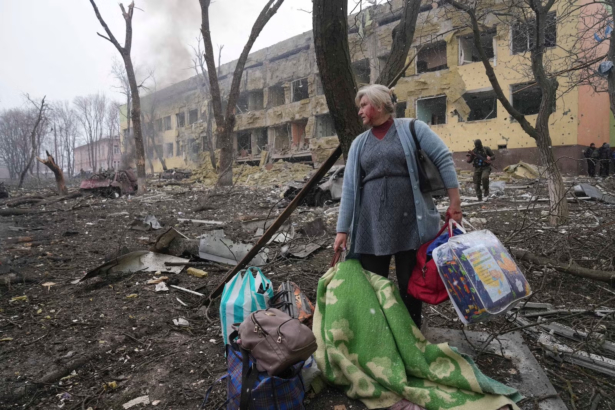

A new report from the Center for Strategic and International Studies (CSIS) paints a grim picture of Russia’s war in Ukraine, estimating that about 1.2 million Russian troops have been killed, wounded, or gone missing since the invasion began nearly four years ago. Analysts say this level of casualties for a major military power has not been seen since World War II.
Despite the enormous human toll, Russia has secured only modest territorial gains, increasing its control of Ukrainian land by just 12 percent since 2022. The report challenges assumptions that a Russian victory is inevitable, noting that Ukraine’s defense-in-depth strategy—trenches, mines, drones, artillery, and layered fortifications—has blunted Moscow’s advances. Casualty ratios also favor Ukraine, with losses estimated at 500,000 to 600,000 compared to Russia’s 1.2 million.
The CSIS study suggests Russia has suffered between 275,000 and 325,000 battlefield deaths, while Ukraine’s toll stands at 100,000 to 140,000. “The data suggests that Russia is hardly winning,” the authors conclude.
Historic scale of losses
Russia’s casualties dwarf those of other major conflicts. The United States lost 57,000 troops in Korea and 47,000 in Vietnam. Russia’s losses in Ukraine are five times greater than all its post-World War II conflicts combined, including Afghanistan and Chechnya. NATO Secretary-General Mark Rutte recently said Moscow lost 1,000 troops a day in December, adding that Soviet forces lost 20,000 in Afghanistan over ten years, compared to 30,000 in just one month in Ukraine.
Foreign analysts warn that Russia’s recruitment and replacement rates cannot keep pace with battlefield losses. Britain’s deputy ambassador to the OSCE, James Ford, said Russian casualties now exceed sustainable replenishment levels.
Minimal territorial gains
Putin’s forces have little to show for the staggering losses. In the past two years, Russian advances have been measured in yards per day—16 in Chasiv Yar, 25 in Kupiansk, and 76 in Pokrovsk—less than Allied gains during the Battle of the Somme in World War I. Overall, Russia has gained less than 1.5 percent of Ukrainian territory since 2022.
Economic fallout
The war has also dragged Russia’s economy down. The report says Russia is slipping into second- or third-rate economic status, citing weak consumer demand, declining manufacturing, high inflation, and labor shortages. Growth in 2025 was just 0.6 percent. While military spending boosts GDP in the short term, the report warns it does not contribute to long-term welfare or capital formation.
This analysis underscores the heavy costs of Russia’s war effort—human, territorial, and economic—while raising doubts about Moscow’s ability to sustain its campaign.