
DOHA, Qatar: Over four years since the fall of Kabul, hundreds of Afghan evacuees remain stranded at a U.S.-operated military base in Qatar, living with the uncertainty of legal status, harsh conditions, and escalating concerns for their security, according to Drop Site News.
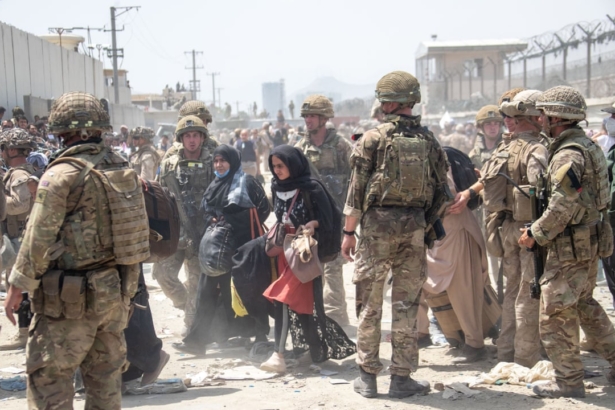
Some 800 Afghan refugees are currently residing at Camp As Sayliyah, a U.S. base near Doha. These evacuees were relocated there in 2021 after the collapse of the Afghan government and were assured they would soon be resettled in the United States. However, their status has been in limbo for years.
The evacuees must first go through additional security screenings before any resettlement can take place. However, for some, this process has been ongoing indefinitely. Afghan evacuees who had already received approval to enter the United States under the Biden administration have seen their applications languish as U.S. policies have changed. The halt of the Priority 1 and Priority 2 refugee referral programs, designed to safeguard Afghans who are at risk because of their past work with Western governments or organizations, has left many families without a clear legal status.
Conditions at the camp are difficult. The living quarters are temporary and consist of flimsy structures with leaky roofs, toilets far away, and a lack of privacy. Noise, congestion, and lack of sleep are also prevalent. “Anxiety and depression are affecting whole families. Children’s education is being affected. Some people are not eating meals because of the stress and irregular schedules. There is no formal school. Everyone’s anxiety and stress have increased,” an evacuee told Drop Site News on condition of anonymity.
Security concerns are also on the rise. Camp As Sayliyah was affected by the conflict between Iran, Israel, and the United States last year, when missile debris entered the camp. Mamdouh, a former contractor for the U.S.-supported Afghan government, said debris fell close to residential areas. “There were no reported injuries, but we are afraid it may happen again,” he told Drop Site News.
Thomas Ruttig, co-head of the Afghanistan Analysts Network, pointed out that it is not known whether Iran was aware that evacuees were living on the base and questioned reports that the base had been fully evacuated. “Evacuees were brought to this base as civilians under the protection of the U.S. but are now living on what may be considered a military target,” he said.
Political developments in Washington have further dimmed resettlement prospects. Many evacuees report halted travel to the US and offers of financial incentives for voluntary return to Afghanistan, a step many fear under Taliban rule due to reports of reprisals against former government employees, journalists, and civil society activists.
“Our bodies are here,” one evacuee said, “but our lives are nowhere.”