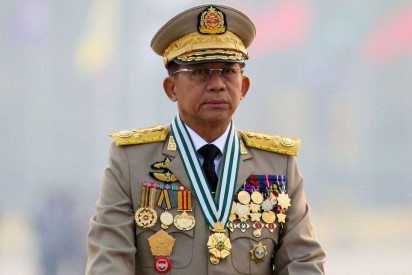

Myanmar’s ruling military junta has announced plans to create a new governing body, the Union Consultative Council, which will oversee both the armed forces and the civilian administration. Experts say the move will allow junta chief Senior General Min Aung Hlaing to assume the presidency while maintaining tight control over the military.
The announcement came shortly after the conclusion of the final phase of a controversial election, which is expected to see parliament convene next month and transfer power to a nominally civilian government. The council will consist of five members and is reported to have sweeping authority over national security, legislative matters, and other key functions.
Analysts describe the council as a “super-body” that places Hlaing above the executive, legislative, and judicial branches. Naing Min Khant, a programme associate at the Institute for Strategy and Policy, said, “This institutional shift appears designed to centralise supreme authority, ensuring the junta retains ultimate control.”
The junta has not provided any official explanation for the council’s formation, and a spokesperson declined to comment when approached.
Hlaing seized power in a coup in 2021, ousting the elected government led by Nobel laureate Aung San Suu Kyi. The coup triggered widespread protests and escalated into a civil conflict that has claimed over 93,000 lives, according to the Armed Conflict Location & Event Data Project.
Although Hlaing has indicated he plans to transfer “state responsibilities” to the incoming government, the creation of the council appears aimed at ensuring he maintains authority over the military while also influencing civilian governance. Legal experts say it would prevent any successor as military chief from accumulating independent power.
The military-backed Union Solidarity and Development Party dominated the election, securing 81% of parliamentary seats, in a vote widely criticised by the UN, Western countries, and rights groups as heavily skewed in favour of the generals’ proxies.