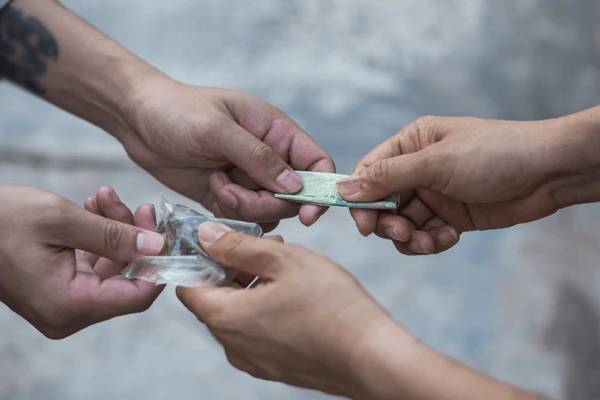

Pakistan’s drug control framework came under sharp scrutiny in the Senate after disclosures revealed that the country is still relying on decade old data to shape narcotics policy, despite millions of drug users and mounting pressure on rehabilitation systems.
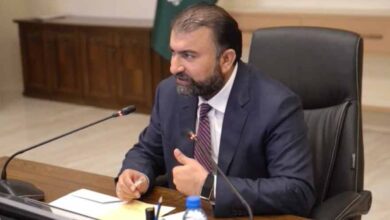
Replying to Question No. 15, Interior and Narcotics Control Minister Syed Mohsin Raza Naqvi informed the House that the last national drug survey was conducted by United Nations Office on Drugs and Crime in 2012 and published in 2013, estimating 6.7 million people using drugs in Pakistan.
A new nationwide survey planned in 2022 and scheduled for completion by December 2023 was never carried out due to capacity constraints, leaving policymakers without updated, evidence based insight into the scale, trends, or regional spread of drug abuse.
The admission triggered concern among senators, who questioned how effective strategies can be designed when the official picture of drug addiction is more than ten years old, despite population growth, urbanisation and evolving drug markets.
In the absence of fresh national data, the government is relying primarily on treatment figures from the Anti Narcotics Force, which currently operates seven Model Addiction Treatment, Rehabilitation and Reintegration Centres (MATR2Cs) across the country.
According to official figures placed before the Senate, 9,710 patients have been treated at the Islamabad centre. In Sindh, 10,025 patients were treated at MATR2C Lyari, 1,830 in Malir, 1,749 in Mangopir, 1,087 in Sukkur, and 2,017 in Hyderabad. In Balochistan, the MATR2C Quetta facility treated 5,321 patients.
While these numbers reflect thousands receiving care, senators noted that they represent only a fraction of the estimated millions of drug users, raising questions about access, coverage and long term rehabilitation outcomes.
The minister acknowledged that Pakistan does not currently receive direct budgetary support from any foreign country or organisation for ANF operations, although international partners such as UNODC, EUACT and US INL have previously assisted with infrastructure, equipment and capacity building.
The Senate was told that without updated survey data, it is difficult to accurately assess emerging trends such as synthetic drugs, youth addiction patterns, or province wise prevalence.
Lawmakers warned that continuing to operate on outdated figures risks underestimating the crisis and misallocating resources, particularly as drug abuse increasingly intersects with crime, public health and social instability.
The session concluded with calls for an urgent, comprehensive national drug survey and stronger investment in prevention and rehabilitation, as senators cautioned that Pakistan cannot afford to fight a growing narcotics problem blindfolded by obsolete data.