
Pakistan has urged the United Nations Security Council (UNSC) to quickly declare the Balochistan Liberation Army (BLA) a terrorist organization, warning that the group continues to pose a serious threat to regional peace and Pakistan’s security.
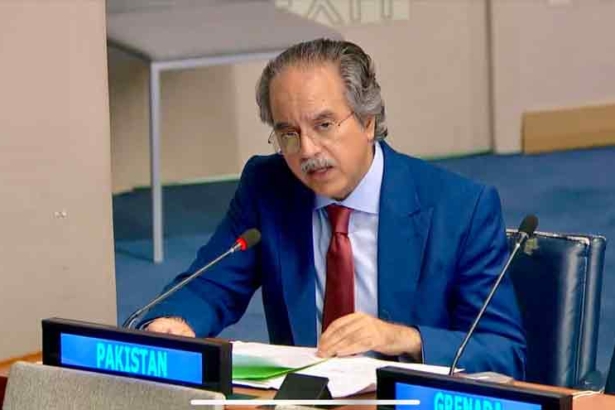
Speaking during a UNSC debate on global terrorism, Pakistan’s Permanent Representative to the UN, Ambassador Asim Iftikhar Ahmad, said the foreign-backed BLA should be listed under the UN sanctions framework established by Resolution 1267. He reaffirmed Pakistan’s commitment to eliminate terrorism and called on the international community to respond in a united and coordinated manner.
The ambassador said militant groups such as the Tehreek-e-Taliban Pakistan (TTP) and BLA gained renewed strength after the Taliban takeover in Afghanistan. He noted that the United States has already designated BLA as a foreign terrorist organization and expressed hope that the Security Council would soon follow suit.
Highlighting growing security concerns, Ambassador Ahmad said these groups operate freely from Afghan territory and receive outside support, carrying out deadly attacks inside Pakistan. He added that UN monitoring reports have also pointed to a permissive environment in Afghanistan for several militant organizations, including TTP, Al-Qaeda and ISIL-K, posing risks not only to Pakistan but to the wider region.
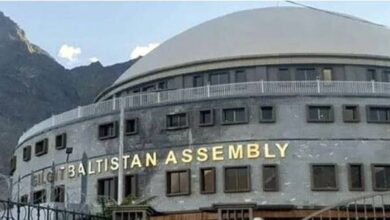
Referring to recent violence, the Pakistani envoy said BLA claimed responsibility for coordinated attacks across Balochistan over the weekend, which killed 48 civilians, including women and children. He added that Pakistan’s security forces responded swiftly, eliminating 145 militants during counter-terrorism operations.
Describing Pakistan as a frontline state in the fight against terrorism, Ambassador Ahmad said the country has suffered more than 90,000 casualties and major economic losses over the years, while playing a key role in dismantling Al-Qaeda networks and countering ISIL-Khorasan.
He also stressed the need to hold external actors accountable for supporting and financing terrorist groups. He warned against using counter-terrorism as a cover for repression, pointing to human rights concerns in Indian Illegally Occupied Jammu and Kashmir, and said legitimate struggles for self-determination must not be mislabeled as terrorism.
The ambassador further called for reforms in global counter-terrorism efforts, saying existing policies often unfairly target Muslims while ignoring other forms of extremism. He urged the UN to address emerging threats, including far-right violence, xenophobia, Islamophobia and nationalist extremism, alongside traditional terrorist networks.
Opening the debate, UN officials warned that Da’esh and its affiliated groups continue to adapt despite international pressure, with expanding activity in parts of Africa and ongoing threats in Afghanistan, Iraq and Syria. They also raised concerns over terrorists increasingly using technology, artificial intelligence, drones and online platforms to recruit and communicate, especially targeting young people.
UN representatives highlights the importance of global cooperation, respect for human rights and inclusive approaches to counter terrorism, calling on member states to streng