
Türkiye and Saudi Arabia will enhance their defence industry cooperation, said Turkish President Recep Tayyip Erdogan on his return flight from Egypt, noting the praise for the homegrown Turkish stealth fighter jet KAAN, with prototypes of the pioneering aircraft set to take flight this summer.
“We’ve received a lot of positive feedback on KAAN. There is a joint investment with Saudi Arabia in this area, and we can implement this partnership at any moment,” Erdogan told reporters following his visits to Riyadh and Cairo.
He described KAAN as more than a military platform, calling it “a symbol of Türkiye’s engineering capability and independent defence will.”
Ankara and Riyadh signed what Erdogan described as “major” defence industry cooperation agreements during the visit, reflecting growing momentum in joint projects. He added that Türkiye continued to prioritise meeting its own defence needs while also supporting allied countries.
Erdogan also described his meetings with Saudi Arabia and Egypt as highly productive, emphasising broader cooperation on defence, energy, trade, and regional diplomacy.
Economic ties and strategic agreements with Saudi Arabia
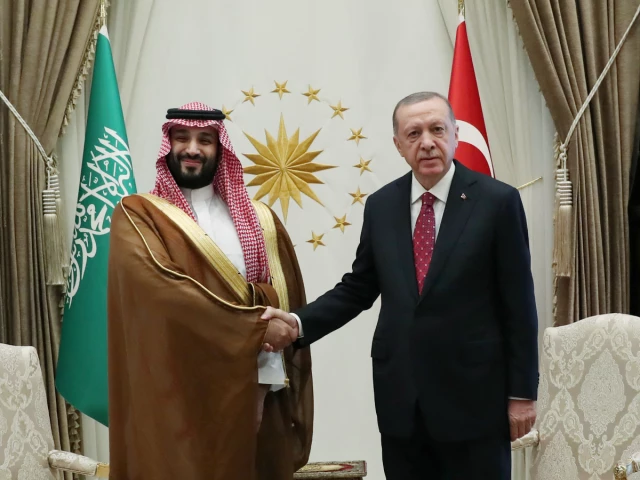
During talks in Riyadh with Crown Prince Mohammed bin Salman, delegations signed four agreements and adopted a joint declaration covering multiple sectors.
Erdogan noted that Saudi Arabia holds a “special position” for Türkiye in defence industry cooperation, transportation, health, investment and contracting services.
Bilateral trade volume reached approximately $8 billion in 2025, he said, while Turkish contractors have undertaken more than 400 projects in Saudi Arabia worth nearly $30b.
He also pointed to future opportunities tied to major international events such as Expo 2030 and the 2034 FIFA World Cup, as well as the growing number of Saudi tourists in Türkiye.
Renewable energy partnership
Energy cooperation was another key outcome of the visit. Türkiye’s Energy and Natural Resources Ministry signed an agreement with the Saudi Energy Ministry focused on investments in renewables.
Under the deal, Saudi companies will build solar and wind power plants in Türkiye with a combined capacity of 5,000 megawatts. Initial projects include two 1,000-megawatt solar plants in the cities of Sivas and Karaman, expected to provide electricity for approximately 2.1 million Turkish households.
The projects will be financed through external funding and international credit mechanisms, with construction expected to begin in 2027 and local content targeted at around 50%.
Strategic dialogue with Egypt and regional cooperation
Following the Riyadh visit, Erdogan travelled to Cairo at the invitation of Egyptian President Abdel Fattah el-Sisi for the second meeting of the Türkiye-Egypt High-Level Strategic Cooperation Council, after the first session in Ankara in September 2024.
Eight documents, including a joint declaration, were signed during the Cairo meetings. Business forums involving private sector representatives were held in both Riyadh and Cairo.
Erdogan said regional developments, particularly in Palestine and Syria, were discussed within a framework of “regional ownership”, emphasising cooperation among leading regional states.
US-Iran tensions and regional stability
On the ongoing tension between Iran and the United States, Erdogan expressed hope that tensions between the two countries will be resolved via dialogue, stressing the importance of establishing negotiations.
He said he has held discussions with US President Donald Trump and Iranian President Masoud Pezeshkian, as well as trilateral talks in Istanbul with Iranian Foreign Minister Abbas Araghchi and Turkish Foreign Minister Hakan Fidan.
The president said Türkiye is doing everything possible to reduce tensions without allowing the region to be dragged into a new conflict or chaos.
“We are clearly against military intervention against Iran,” Erdogan said, emphasising dialogue as the only viable path forward. “The solution to problems is not conflict but meeting on common ground and negotiating.”
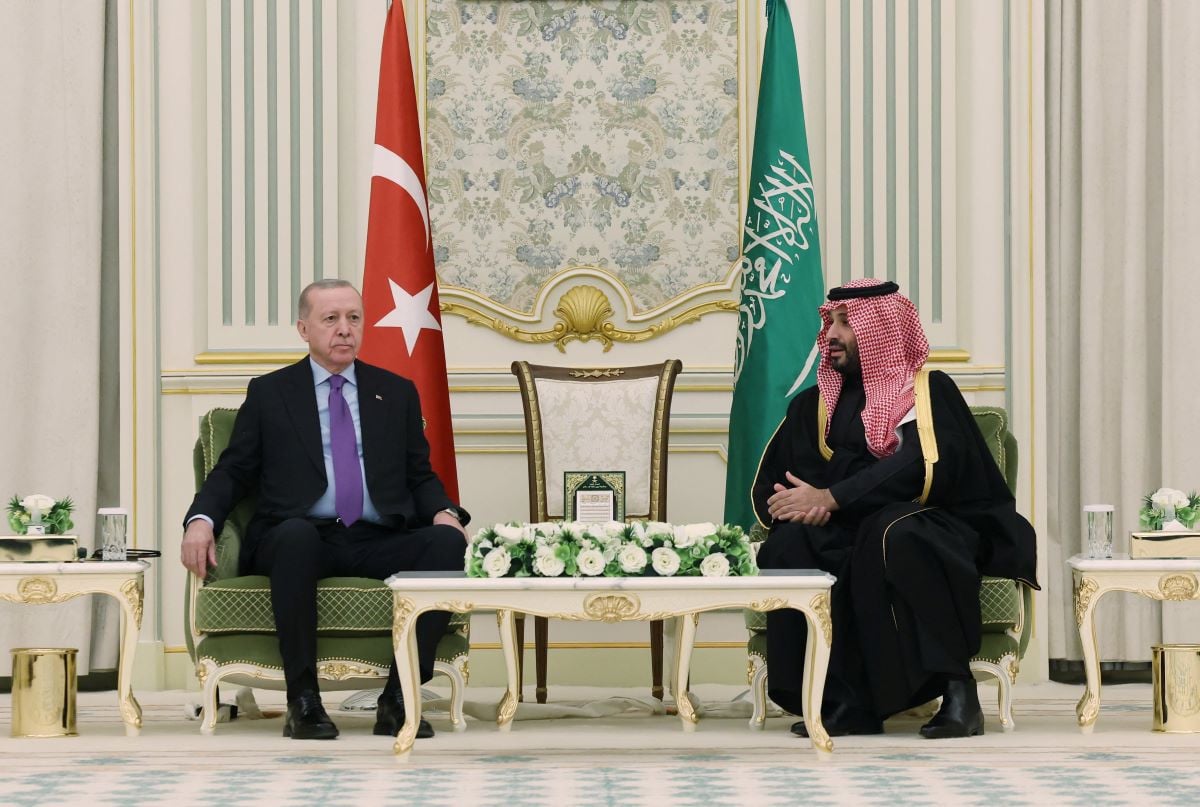
Turkish President Tayyip Erdogan meets with Saudi Crown Prince Mohammed bin Salman in Riyadh, Saudi Arabia, February 3, 2026. PHOTO:REUTERS
He added that efforts are ongoing to strengthen diplomatic channels and potentially advance talks from lower-level discussions to leader-level negotiations.
“The process is alive and has not broken down. The ground remains open for dialogue and diplomacy,” Erdogan said.
Gaza: Peace plan and humanitarian efforts
On the situation in Gaza, the president said, “Türkiye will play an active role to ensure proper implementation of the Gaza peace plan and restore peace and stability in Gaza,” adding that Ankara seeks to establish peace “not on paper, but on the ground”.
The president said steps toward a ceasefire, humanitarian aid access, and the protection of civilians must be implemented urgently, stressing that Türkiye is making significant efforts to achieve these goals.
Erdogan said Türkiye’s stance is rooted in humanitarian principles beyond religious or political considerations, adding that if similar abuses occurred elsewhere, even if committed by Muslims, Ankara would oppose them just as strongly.
Despite ongoing ceasefire violations, he said phase one of the peace plan had been completed, while expressing concern over continued Israeli attacks and restrictions on humanitarian aid entering Gaza.
“Israel’s endless attacks and ceasefire violations are unacceptable,” Erdogan said, calling on the international community to pressure Israel to fully comply with the terms of the ceasefire.
He emphasised coordination with Saudi Arabia and Egypt during ceasefire negotiations and ongoing dialogue to facilitate Gaza’s reconstruction. Erdogan noted Egypt’s crucial role in coordinating humanitarian aid deliveries via the Rafah crossing into Gaza.
The president added that joint efforts seek to restore calm and advance reconstruction.
Regional peace vision and Syria
Erdogan reiterated Türkiye’s opposition to new conflicts in the region, saying both Ankara and Riyadh share an interest in stability.
“We do not want a new war in our region,” he said, arguing that diplomacy and cooperation offer the only sustainable path to peace.
On Syria, he stressed Türkiye’s support for a unified Syrian state based on “one state, one army, one Syria”, while urging armed groups to respect agreements that could strengthen stability in northern Syria.
He urged the group known as the SDF to comply with agreements, saying this would strengthen the climate for peace and facilitate lasting stability.
The president emphasised that Türkiye supports a unified and peaceful Syria embracing all communities, Kurdish, Arab, Turkmen and Alawite, while stressing that Ankara’s fight is against terrorism and those using it to pursue separatist aims.
Erdogan also said Türkiye, Saudi Arabia and Egypt aim to remain actively engaged in regional diplomatic processes, particularly on Gaza and wider Middle East stability.
“We want to talk about peace and cooperation,” he said, adding that expanding diplomacy and economic partnerships remain vital for both Türkiye’s interests and regional security.