
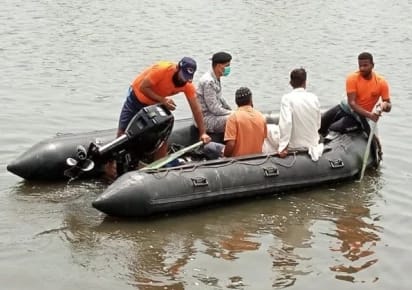

Pakistan’s coastal waters, long known for their unpredictable conditions and frequent maritime emergencies, are set to benefit from a major technological upgrade as the country prepares to deploy unmanned aerial vehicles to strengthen sea-based search and rescue operations.
With fishing boats and commercial ships regularly facing rough seas, strong winds and limited visibility, accidents at sea remain a persistent challenge for maritime authorities. In response, the Pakistan Maritime Security Agency has approved the induction of high-speed drones designed to enhance monitoring and emergency response capabilities across the Arabian Sea.
These advanced unmanned aircraft will be equipped with state-of-the-art cameras and sensor systems, allowing real-time surveillance and improved situational awareness during maritime incidents. The drones will support rescue missions within a range of up to 200 nautical miles, or approximately 360 kilometres, from the coastline.
Deputy Director General of the Maritime Security Agency, Commodore Syed Nauman Ali, said the new technology would significantly improve the agency’s ability to respond to emergencies at sea. He explained that the drones would be deployed immediately after an incident is reported, helping rescue teams pinpoint exact locations and assess conditions on the ground through live video transmissions. In addition to reconnaissance, the unmanned systems will be capable of delivering essential rescue equipment. Life jackets and flotation bags can be dropped directly to individuals stranded in the water, providing immediate assistance while rescue vessels and helicopters are dispatched.
Currently, early response efforts rely on Defender aircraft, which have limited operational capacity and are dependent on weather conditions, fuel readiness and air traffic clearance. These factors often cause delays at critical moments.
The upcoming drone fleet, expected to be fully operational by the end of the year, is intended to overcome these limitations and allow faster, more flexible deployment.Commodore Nauman Ali confirmed that groundwork for the project has been completed and that the unmanned aircraft will soon be integrated into the agency’s existing maritime assets. Once in service, the drones will swiftly reach accident sites, transmit continuous audio-visual updates to command centres and provide guidance to fast-moving rescue boats and helicopters fitted with winching equipment for evacuating survivors.
The drones will also maintain extended presence over emergency zones, offering sustained aerial coverage throughout rescue operations. This capability will enable teams on land, sea and air to coordinate movements more accurately and efficiently. Emergency supply packs, along with flotation devices, can be delivered repeatedly until larger rescue platforms arrive.
Unmanned aerial vehicles operate without onboard pilots and are controlled remotely or through automated systems. Guided by GPS and satellite communication, some models can independently navigate routes and adjust flight paths.
Equipped with thermal imaging and high-resolution cameras, the drones can detect human heat signatures even at night, while onboard radar systems allow effective operation during poor weather, heavy rain and high waves.This technological step is expected to mark a significant advancement in Pakistan’s maritime safety framework, enhancing both response speed and rescue effectiveness in challenging sea conditions.