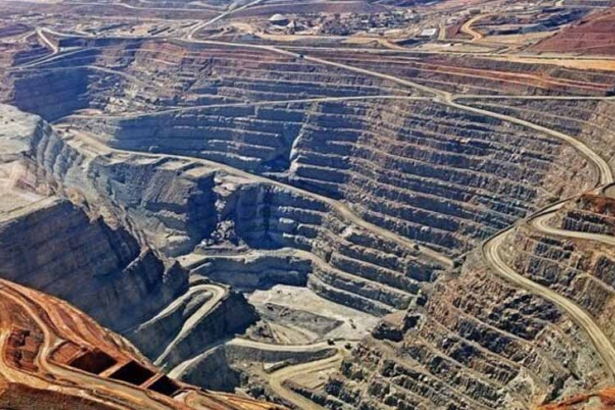

The United States has committed $1.3 billion in financing for Pakistan’s flagship Reko Diq copper and gold mining project in Balochistan, marking a major boost for one of the country’s most significant mineral development ventures and strengthening bilateral economic cooperation between the two nations.
The funding has been approved under the US Export-Import Bank’s (EXIM) critical minerals financing framework, a programme aimed at supporting the extraction, processing and supply of key raw materials considered vital for global manufacturing and clean-energy supply chains.
The allocation for Reko Diq forms part of Project Vault, a $10 billion EXIM-backed initiative designed to enhance supply-chain security and help establish strategic reserves of critical minerals worldwide. The programme prioritises projects that reduce dependence on limited sources and ensure stable access to essential resources.
The Reko Diq project, one of the world’s largest undeveloped copper and gold deposits, is being developed through a partnership between Pakistan and a Canadian mining company. The project requires an estimated total investment of $3.2 billion. Construction activities at the site are already in progress, while commercial production is expected to begin in 2028, according to project timelines.
Official fact sheets indicate that EXIM’s authorised critical minerals portfolio spans multiple jurisdictions and industries. Alongside Reko Diq, approved financing includes $27.4 million for advanced metal powder manufacturing in Pennsylvania, $23.5 million for critical metal processing in Tennessee, $15.9 million for zinc mining operations in New York, and $11.1 million for titanium processing facilities in Virginia.
Over the past year, the Export-Import Bank has issued Letters of Interest worth approximately $14.8 billion for critical mineral projects across the globe. These commitments cover a wide range of initiatives, including rare-earth processing and lithium extraction projects in the United States, as well as cobalt and nickel production ventures in Australia. Tin extraction projects in both the United Kingdom and Australia have also received backing under the programme.
In parallel, the US Department of Energy has played a growing role in supporting mineral and battery supply-chain development through its Loan Programs Office. The department has approved multi-billion-dollar loans and conditional commitments for projects involving lithium, graphite and potash extraction, as well as large-scale battery recycling initiatives across the United States.