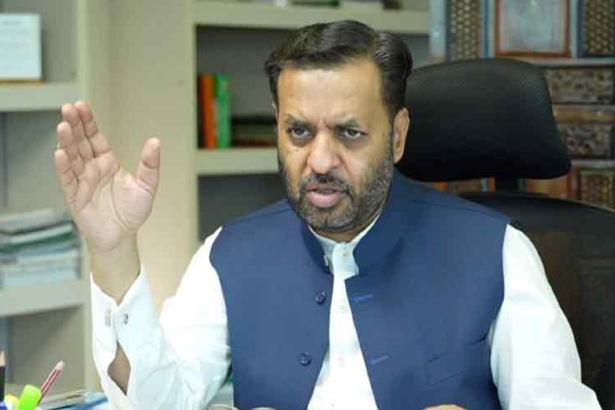

Federal Health Minister Mustafa Kamal has called for the creation of an “OIC Vaccine Alliance,” bringing together Islamic countries to strengthen vaccine production and reduce dependence on imports.
Speaking at the fourth meeting of the OIC Vaccine Manufacturers Group, Kamal highlighted the growing importance of vaccines in global healthcare. He said that with Pakistan’s population of 240 million, increasing by over six million each year, meeting the demand for vaccines is a major challenge.
Kamal stressed that local vaccine production is vital to ensure the country can meet its population’s needs and reduce reliance on foreign supplies. He shared that Pakistan aims to stop importing vaccines by 2030, but emphasized that efforts to expand production must begin immediately.
The health minister noted that Pakistan already has strong institutions, such as the National Institute of Health, to support vaccine development. However, he acknowledged that vaccine production is not a highly profitable business, making international cooperation essential for success.
He added that Pakistan is already collaborating with countries like China, Saudi Arabia, and Indonesia to enhance vaccine manufacturing and ensure the nation is prepared for future health challenges.
Moreover, Federal Health Minister Syed Mustafa Kamal announced a high stakes plan to shift Pakistan toward indigenous vaccine production, warning that international support for routine immunization is set to taper off and could leave Pakistan facing an estimated $1.2 billion annual vaccine bill, a burden he said the country’s fragile economy may struggle to absorb if local capacity is not built in time.
Addressing a press conference, Kamal said Pakistan’s healthcare challenge must move from “sick care” to “health care,” stressing that vaccination is the first line of prevention for a country of around 25 crore people, where roughly 62 lakh children are born each year. He stated that Pakistan currently provides free vaccination against 13 diseases through a coordinated federal provincial system, including doorstep access and Basic Health Units, but the funding model is approaching a critical transition.
Kamal said Pakistan currently purchases routine immunization vaccines at an estimated cost of $400- $500 million, made affordable largely due to pooled procurement and support through global partners under the Gavi framework. He told journalists that at present, Pakistan covers 51% of the cost while 49% is supported by international partners, but this support is expected to steadily decline until Pakistan reaches 100% self financing, a shift he linked to the country “graduating” from donor support around the 2030–31 period. He cautioned that without preparedness, Pakistan could be forced into a scenario where vaccines become unaffordable, triggering preventable outbreaks and a crushing hospital burden.
To avert that risk, Kamal said the Ministry of National Health Services, Regulation and Coordination along with DRAP and the National Institutes of Health (NIH) has spent the past six to seven months pursuing a single strategic objective: moving Pakistan toward local vaccine production and eventually positioning the country as a regional manufacturing and export hub. He noted that Pakistan recently added the HPV vaccine for cervical cancer prevention into its routine program, and argued that future vaccine additions are likely as global standards expand. As a comparison, he said Saudi Arabia vaccinates children against 47 diseases, while many countries administer 50 to 60 vaccines.
Kamal described outreach to multiple countries for partnership, saying he held more than three meetings with China’s health leadership, more than two with Indonesia’s health leadership, and three meetings with Saudi Arabia’s health minister, alongside engagement with Saudi Arabia’s industrial leadership because vaccine manufacturing falls under the industry portfolio there. He said Saudi Arabia has been working on local vaccine production for about a decade, and Pakistan aims to benefit from that experience rather than “reinvent the wheel.”