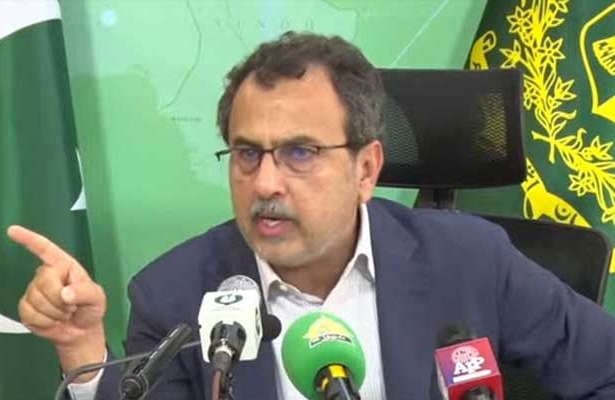

ISLAMABAD: Federal Minister for Energy Awais Leghari has stated that the government does not have the capacity to provide a 70% discount on electricity bills, saying there is no financial room for further subsidies in the power sector.
Speaking on a private media, the minister said the number of electricity consumers using less than 200 units has sharply increased from 9 million to 21 million. He explained that many well-off households have shifted to solar energy and now fall into the lower-usage category, making it unfair and unsustainable for the state to offer heavy discounts to such a large group.
Awais Leghari said Pakistan’s industrial electricity rates have now come close to those of other countries in the region. He dismissed claims that electricity in Bangladesh costs only six to seven US cents per unit, calling those figures inaccurate.
The energy minister said the government is working on restructuring the power sector’s debt to help reduce electricity prices across the board, rather than offering relief only to industrial consumers. He added that instead of new subsidies, the tariff system could be adjusted by increasing fixed charges while lowering the per-unit cost of electricity.
His remarks come shortly after the federal government announced relief for industries, including a reduction of Rs4.04 per unit in electricity tariffs and a cut in the export refinance scheme rate from 7.5% to 4.5% to support businesses and boost exports.
Meanwhile, the government has also proposed changes to domestic electricity tariffs. Under the proposal submitted to Nepra, some household consumers may receive a reduction of up to Rs1.53 per unit in base tariffs, while fixed monthly charges are likely to increase for certain protected and unprotected consumers.
According to the proposal, households consuming higher units could benefit from lower per-unit rates, while fixed charges for some lower-usage consumers may rise. Nepra is scheduled to hold a public hearing on February 10, 2026, to gather feedback from stakeholders and the public.
Addressing concerns about changes in solar energy policies, the minister said consumers using solar net metering who consume most of their own generated electricity would still be able to recover their investment within 18 months under the proposed rules. However, those exporting a larger share of electricity to the grid may take up to three and a half years to recover costs.
He added that under current regulations, where electricity is bought back at Rs27 per unit, investment recovery is faster, but the proposed changes aim to create a more balanced and sustainable energy system.