
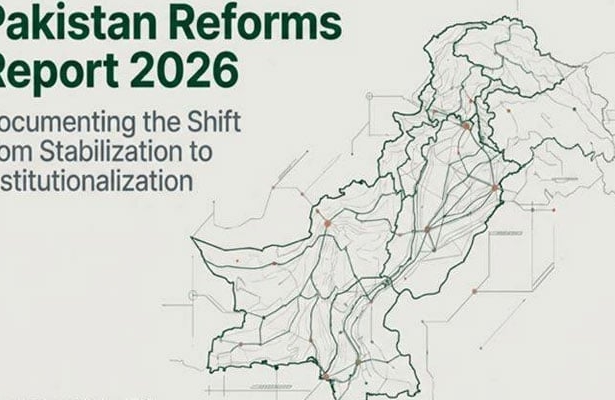

Pakistan has unveiled its 2026 Reforms Report, documenting more than 600 governance reforms across 135 federal institutions.
The report was prepared by the World Economic Forum’s country partner, the Mashal Pakistan Institute. It provides a comprehensive record of reforms implemented in ministries, divisions, and attached organizations. The second edition of the report highlights a total of 660 reforms.
According to the report, the volume of reforms has increased fivefold compared to the previous year. Policies are now increasingly focused on building long-term state capacity. The energy sector accounts for nearly 40 percent of total reform activities, while law and justice, digital governance, and IT have emerged as prominent sectors. The trend indicates a strong shift toward structural and digital transformation.
Over 200 reforms have already been implemented through digital platforms, improving transparency and reducing discretionary powers. Reforms in the financial and energy sectors have included renegotiation of agreements with Independent Power Producers (IPPs).
The report projects savings of PKR 1.4 trillion in the power sector. It also highlights progress in leveraging Pakistan’s local energy and mineral resources. Notably, the $6 billion Reko Diq copper and gold project has seen advancement, while new policies for tight gas and offshore exploration aim to attract $5 billion in investment.