
Ethiopia has become a new, but clandestine, actor in Sudan’s vicious civil conflict with obvious proof of a secret training camp for RSF-affiliated fighters on Ethiopian soil, as evidenced by a recent discovery that has represented a big turn for a conflict rated as one of the deadliest globally.
Satellite photos, intelligence reports, and information from several officials indicate that thousands of militants are receiving training in a remote part of western Ethiopia near the Sudan border. The reports indicate growing concerns about the escalating war in Sudan and how it is dragging in neighboring countries.
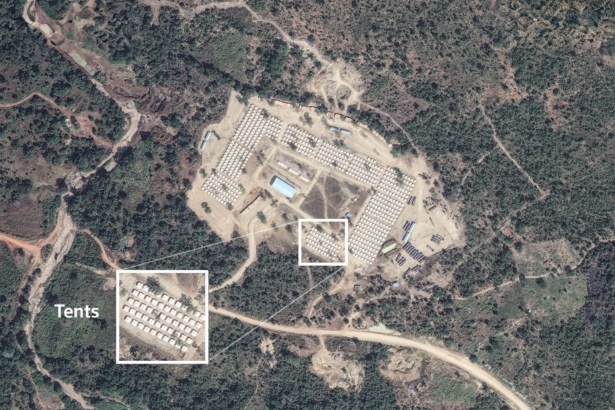
The covert camp appears in the sparsely populated and forested Benishangul-Gumuz region of Ethiopia; the country is bordered by both Sudan and South Sudan. Images collected in January 2026 display the hundreds of tents arranged in rows, the arrival and departure of heavy vehicles, and the construction in the camp. Defence experts have suggested that the size of the camp indicates that it has the potential to accommodate several thousand recruits at any one time.


According to eight sources, including the Ethiopians and diplomats who know the details of the camp, the camp is constructed with the support of foreign funding and logistics. Some of the sources have mentioned the United Arab Emirates as the major financier; however, the confirmation remains difficult.
The UAE has denied participating in the war in Sudan through a declaration made through its foreign ministry that it is not a party to the war and does not back any hostility. However, the Sudanese army has made the claim that the UAE supports the RSF, and their claim has been deemed credible by UN experts and some members of the US Congress.

The civil war in Sudan began in April 2023 as a result of power struggles between the Sudanese Armed Forces and the RSF, which interrupted the transition to civilian rule. Since then, the civil war has had disastrous effects, including famine, displacement, and various atrocities, as millions of people flee to adjacent countries.
The newly discovered camp seems to aim at having a steady supply of new RSF fighters as the intensity of fighting in the region of southern Sudan, particularly Blue Nile state, has increased. Ethiopian intelligence documents, which Reuters saw, indicated that over 4,000 RSF fighters were in training as of early January, with hundreds deployed on the other side.
The authorities noted that the bulk of the recruits are Ethiopians, while others from Sudan and South Sudan have been seen. Some claims have indicated the presence of Sudanese rebels, though the leadership of the rebels dismissed these claims.
The process of establishing the camp seems to be associated with key officials of the military intelligence of Ethiopia. Various sources indicated that the process is controlled by the chief of the Defence Intelligence Department, which is headed by General Getachew Gudina. However, he has not made any comments.

Work on this camp has been ongoing discreetly since April 2025, with forest clearing being the first step, then followed by the building of metallic-roofed structures and tents. Satellite imagery in November this year also indicates that there are more than 600 tents, with each tent capable of holding multiple fighters. Janes, a defence intelligence company, estimated that this camp could hold a capacity of at least 2,500 people at any given time, although some diplomatic cables suggest a capacity of 10,000 people could be achieved.

Accounts from Ethiopian military officials describe the activities of convoys of trucks, which acted as recruitment conduits to the region in November. On a particular day, over 50 trucks, each carrying dozens of fighters, proceeded through the dirt roads to the camp. Subsequent convoys were reported a few days later, implying a steady supply of personnel.

The site also derives strategic significance from the nearby Asosa airport, which is 50 kilometers away. According to satellite images, the location has seen extensive development since mid-2025. The changes include the construction of a number of hangars and the establishment of drone ground facilities. Experts argue that the drone ground facilities are similar to those found elsewhere in Ethiopia.
According to this source, the facility is being used as a base for drone operations. Consequently, this facility may be used for international logistics or surveillance linked to operations carried out by the RSF. Some reports indicate that this facility received foreign backing to finance the refurbishment.
The camp is situated near the largest hydro-power dam in Africa, known as the Grand Ethiopian Renaissance Dam (GERD), which is of great concern to diplomats and security experts. The location of the dam is just over 100 kilometers away from the training ground.
A further dimension of the case can be added by considering the strengthening relations between the UAE and Ethiopia.
The increasing alliance between Ethiopia and the UAE adds yet another dimension to this story. Since 2018, when PM Abiy Ahmed took power, Abu Dhabi has emerged as a significant geopolitical ally, promising billions in aid and investment dollars to Ethiopia. The two have strengthened their military alliance, signing a defense deal in 2025 aimed at enhancing Ethiopia’s air power.

Recent defense ministry photographs from the UAE showing the country’s top military leaders and their Ethiopian counterparts discussing and meeting have raised speculations of an intense level of cooperation. Both parties, though calling for the cessation of hostilities in the country, might be undermining the progress through their activities.
Neither Ethiopia’s government nor RSF replied to detailed questions about the camp. Similarly, Sudan’s army also did not respond to questions. The unclear situation has aggravated concerns that the conflict in Sudan could escalate into a broader regional conflict, with secret alliances, proxies, and funding changing the nature of the conflict.
The presence of yet another secret war camp just over the border in Ethiopia serves as a eerie reminder of how the ripple effect of this war is spilling over into neighboring countries and redrawing the security map of northeast Africa.