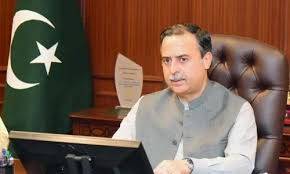
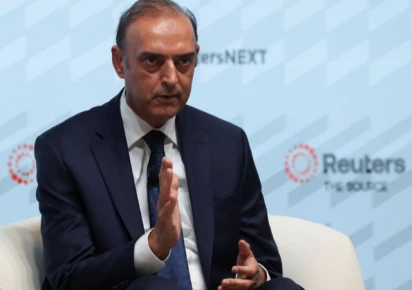

KARACHI: State Bank of Pakistan (SBP) Governor Jameel Ahmad has expressed confidence that the country’s economy could expand by as much as 4.75 percent in the current fiscal year, offering a more optimistic outlook than the International Monetary Fund’s (IMF) recent downgrade.
In written comments to Reuters, the central bank chief said Pakistan’s economic recovery is stronger and more broad-based than suggested by recent export figures, which showed weakness in the first half of the fiscal year. He maintained that underlying indicators reflect improving momentum across key sectors.
The SBP has revised its growth projection for FY26 upward to a range of 3.75 to 4.75 percent — an increase of 0.5 percentage points from its earlier estimate. The revision comes despite a contraction in exports and a widening trade deficit during the first half of the fiscal year.
Governor Ahmad noted that differences between SBP and IMF projections are not uncommon, explaining that forecasting methods and timing assumptions often vary. He pointed out that the IMF’s latest outlook incorporates assessments related to recent flood impacts, which may have influenced its more cautious stance.
“All available data, including first-quarter figures for FY26, indicate a broad-based recovery across agriculture, industry, and services,” Ahmad said. He added that the agricultural sector has shown resilience despite flood-related challenges and is performing above initial targets.
Monetary Easing Supporting Growth
The SBP chief emphasized that financial conditions have eased considerably following a cumulative 1,150-basis-point reduction in the policy rate since June 2024. According to him, the full effects of these rate cuts are still filtering through the economy, helping stimulate business activity while maintaining price stability.
Last month, however, the central bank opted to keep its benchmark interest rate unchanged at 10.5 percent, surprising some market participants who had anticipated a further cut.
The divergence between the SBP and IMF outlooks comes at a sensitive time, as Pakistan continues to stabilize its economy under a $7 billion IMF programme after emerging from a severe balance-of-payments crisis.
Exports Under Pressure, Remittances Provide Support
Historically, periods of strong economic growth in Pakistan have exerted pressure on the currency and foreign exchange reserves. Investors are therefore closely watching whether the current recovery can be sustained without reigniting external vulnerabilities.
Governor Ahmad highlighted encouraging high-frequency indicators, including a 6 percent rise in large-scale manufacturing output between July and November, as evidence of strengthening domestic demand.
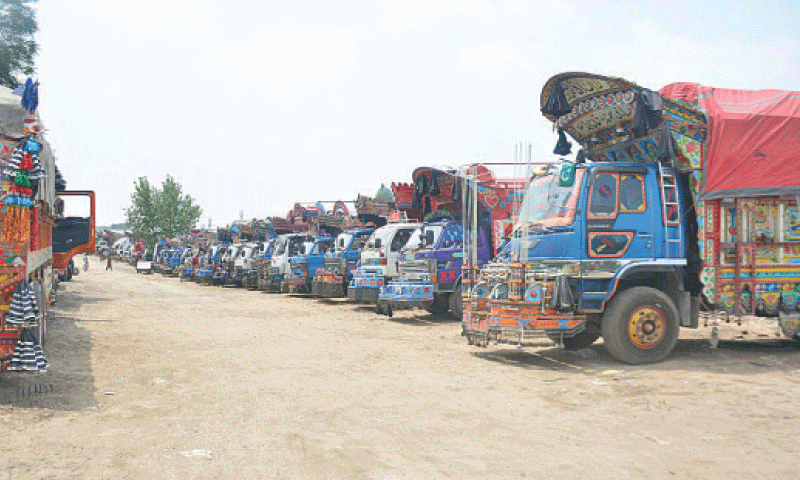
He acknowledged that exports declined during the first half of FY26 but attributed the slowdown to lower global commodity prices and temporary border disruptions rather than weakening economic fundamentals.
The SBP expects the current account deficit to remain contained within 0 to 1 percent of GDP, supported by steady remittance inflows that are helping offset the trade imbalance. Remittances have remained robust, and additional inflows are anticipated around the Eid festival period.
“Foreign exchange reserves are projected to remain above programme targets,” Ahmad said, adding that potential access to international capital markets could further strengthen the external position.
Pakistan is planning to issue yuan-denominated panda bonds in China’s domestic market around the Lunar New Year as part of efforts to diversify funding sources and expand its investor base.
The governor also noted that the SBP has been consistently purchasing dollars from the interbank market to build foreign exchange buffers, with data on these operations made publicly available.
Need for Structural Reforms
While acknowledging improvements in macroeconomic stability, Ahmad stressed that long-term, sustainable growth will depend on structural reforms aimed at enhancing productivity, competitiveness, and investment.
“Stability has improved, but reforms remain essential to unlock higher and more durable growth,” he said.