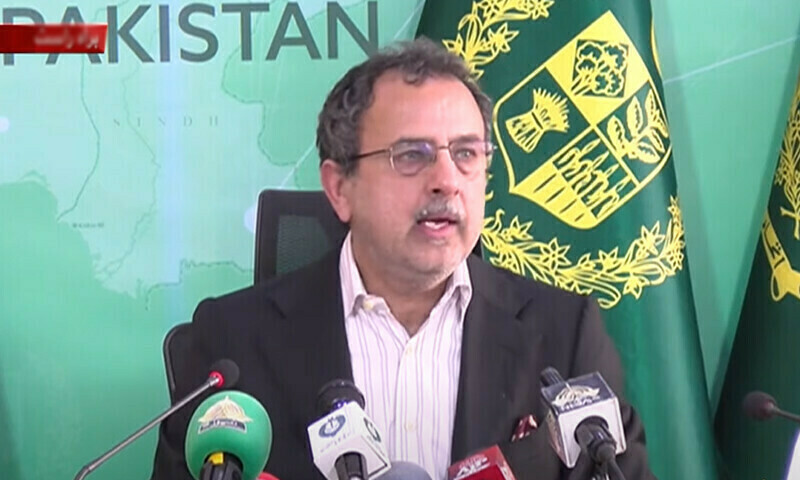

Pakistan’s Energy Minister Awais Leghari on Thursday assured that low-income households will not be affected by the government’s new solar energy policy. The policy replaces the net metering system with net billing.
Speaking in the National Assembly, Leghari said only a small portion of solar users will see any impact. Pakistan currently has 20,000 to 22,000 megawatts of solar capacity. Of this, around 6,000 megawatts are linked to net metering. This means roughly 600,000 to 700,000 consumers, about eight to ten percent of all solar users, will be affected.
The minister reminded lawmakers that he introduced the net metering system in 2017. Since then, it has undergone multiple regulatory changes. He acknowledged criticism from the public and political circles, including members of his own party. He rejected claims that the new rules are anti-solar or anti-people.
Leghari explained that the revised regulations reduce the profit margin for net-metered consumers from 50 percent to 37 percent. He emphasized that no one will suffer financial losses. Existing users will continue to receive the purchase rate of Rs27 per unit due to contractual obligations. He admitted this has caused debate.
The minister addressed concerns over the pricing gap between electricity bought at Rs27 per unit from net-metered users and retail rates of Rs45 to Rs65 per unit. He called this comparison misleading. When electricity from hydel, solar, wind, nuclear, gas, and coal is averaged, the cost is Rs8.31 per unit.
Leghari highlighted Pakistan’s progress in clean energy. In 2024-25, 55 percent of electricity came from clean sources. He said the country aims to reach 60 percent by 2030 and 90 percent by 2034.
He also pointed out that about 466,000 net-metered consumers caused system-related issues. However, he said these users also helped promote clean energy. Leghari criticized those who undermine public trust in government energy policies and international commitments.
PPP lawmaker Sharmila Faruqui disagreed. She said the government is unfairly blaming net-metered consumers for issues in the national grid. She said these users were following government policy. Faruqui called the policy shift a “broad daylight robbery.”
MQM lawmaker Moin Pirzada raised concerns over prolonged load-shedding on K-Electric feeders. Parliamentary Secretary for Power Division Aamir Talal said a detailed response will be provided in the next Assembly session. The deputy speaker directed him to do so.