

Democracy is not failing because we disagree. it is failing because we are living in different timelines. From Washington to Islamabad, democracy is being pulled apart by a conflict it was never designed to manage: memory versus anticipation. The growing instability of democracy worldwide cannot be explained by polarization alone; it reflects a deeper divide between generations shaped by radically different experiences of time. Some voters cling to a past they fear losing, while others rage against a future they fear will never arrive, and democracy is caught between them. The real divide in democracy today is not left versus right, but past versus future.
Understandably, it is common to characterize democracy as a battleground of ideologies: nationalist vs globalist, liberal versus conservative, left versus right. However, what we are witnessing around the world is no longer explained by this framing. Rather than revitalizing systems, elections are destroying them. Politics itself is being rejected by protest movements. Therefore, democratic institutions are losing their credibility abruptly rather than gradually.
In fact, there is a serious and severe need to understand that the real divide in democracy today is not an ideological, but a temporal. Generations that have drastically different perspectives on time are tearing democracy apart across continents. One uses memory to rule. the other via anxiety about what lies ahead. Furthermore, the two were never intended to be reconciled by our political and democratic institutions.
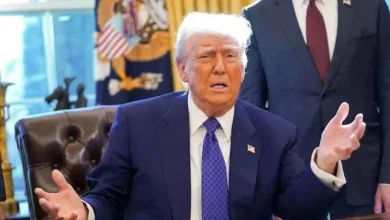
Furthermore, Aging voters rule democratic life in the Global North. What they recall from their jobs; stable employment, cultural stability, and national unity which influences their politics. Therefore, they resort to populism; a pledge to bring back a fictional past when they feel threatened. Even for better understating like, “Make America Great Again” was more than just a catchphrase for Donald Trump; it was a temporal argument. It stated that although the future is perilous, we can be saved by the past. Populism provides comfort rather than answers. It hollows out democracy’s rules while maintaining its exterior.
Moreover, civil services, courts, and the media are criticized for impeding the will of the people. Elections continue to take place, but confidence declines. Technically, democracy endures, but its essence is lost.
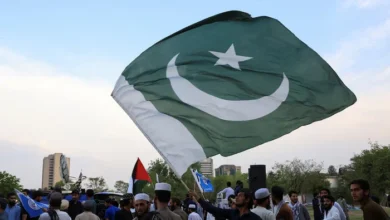
The situation is the opposite in the Global South. The majority of populations are young. In nations like Egypt, Nigeria, or Pakistan, the average person has never experienced a functional democratic state. They do not think the system is flawed, but non-existent and irrelevant. This is where anarchism emerges as a political sentiment rather than a theory. It is the complete rejection of institutions. Similarly, Imran Khan’s ascent in Pakistan started out as reformist populism but turned into something more unstable: widespread mobilization driven by the conviction that all current institutions are irreparably corrupt. Parties, legislatures, and courts are now viewed as opponents of change rather than as venues for it. Given the scenario one can assume that where populism erodes democracy from within, anarchism risks dismantling it entirely.
It is imperative to understand that demographics are the driving force behind this disparity. The Global North is getting older and getting smaller. The Global South is a young and growing region. However, both are run by organizations designed for a more leisurely, stable time; one in which successive generations had similar aspirations for advancement. Voters who are older typically view change as dangerous. Delays are viewed as disastrous by younger generations. The most obvious example is climate policy. For those safeguarding their property and pensions, gradualism seems responsible. It sounds like surrender to people who are dealing with ecological collapse and precarious employment.
In the current democratic arrangement, one generation must lose in order for the other to feel secure. That is not a compromise. Resentment is controlled. As a result, we are currently seeing impasse in wealthier democracies, uprisings in less fortunate ones, and a waning belief in democracy’s ability to bring about a worthwhile future. Leadership and civic education alone are not to blame for this. It’s a design failure. Factually, democratic systems were designed to balance ideas and interests rather than opposing timelines. They believe that even while people disagree on how to accomplish progress, they generally agree on what progress looks like. That presumption no longer exists. Democracy will continue to break down along generational lines unless it learns to govern across time. However, what would adaptation entail? It does not imply freezing society to preserve the past or giving authority to young people at the expense of experience. It entails institutionalizing long-term thinking without sacrificing stability: genuine youth involvement in decision-making, policies that equitably distribute transition costs, and political narratives that transcend nostalgia and utopian fervor.
The decision is clear-cut. Democracies can change to balance memory and expectation, or they can turn into battlefields in the South and museums in the North. To simply put, the past cannot govern the future. The future cannot erase the past. And democracy cannot survive unless it learns to hold both at once. Right now, it is running out of time.