
“Injustice anywhere is a threat to justice everywhere,”Martin Luther King Jr.
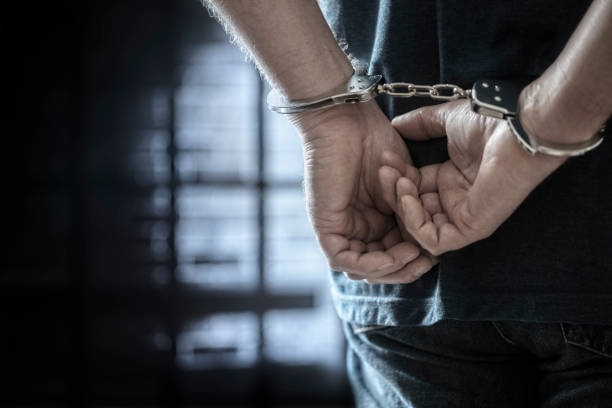
The reported loss of vision in one eye of Imran Khan while in state custody has become one of the most troubling episodes in Pakistan’s recent political history. Beyond partisan loyalties, it has raised a fundamental question for the country, how does a state treat those it detains, especially when the detainee is a former elected leader? In any legal system that claims adherence to constitutionalism and human dignity, the health of a prisoner is not a privilege but an obligation. When that obligation is perceived to have failed, the consequences extend far beyond the prison walls.
Medical experts agree on one point without ambiguity, damage to eye vision is often time-sensitive and, if not treated promptly by specialists, can become irreversible. In this context, delayed diagnosis, restricted access to advanced medical facilities, or prolonged confinement under physical and psychological stress transform a health issue into a humanitarian emergency. The state, having assumed full custody, bears full responsibility. Once vision loss occurs under detention, the burden shifts decisively to the government to prove that every possible medical step was taken without delay. Anything short of that invites allegations of negligence, not political victimhood, but legal liability.
The consequences for the government are therefore serious and multidimensional. Legally, continued delay in providing independent and immediate medical treatment risks violating constitutional guarantees of life and dignity. Morally, it places the state in a position where punishment appears to extend beyond lawful confinement into bodily harm. Politically, it deepens an already severe trust deficit between citizens and institutions. Governments are judged not by how they treat allies, but by how they treat opponents when power is absolute and accountability feels distant.
Within Pakistan’s political landscape, the impact is equally profound. Pakistan Tehreek-e-Insaf finds itself weakened, fragmented, and struggling with leadership uncertainty, yet the suffering of its founder has reactivated public sympathy even among those disillusioned with politics altogether. For many citizens, the issue is no longer about party slogans or electoral narratives; it is about the fear that the justice system can be used to exhaust, rather than adjudicate. When courts become instruments of delay in urgent medical matters, public perception shifts from respect to skepticism.
This moment is likely to reshape how people relate to politics in Pakistan. A growing segment of society, already fatigued by instability, inflation, and institutional conflict, may retreat further into cynicism, believing that politics is no longer about governance but survival. Others may radicalize emotionally, viewing state institutions as morally compromised. Both reactions weaken democratic culture. When people begin to believe that law cannot protect life, disengagement and unrest become equally dangerous outcomes.
Crucially, the argument that medical treatment must await prolonged judicial processes does not withstand legal or ethical scrutiny. Courts exist to protect rights, not to suspend them. Emergency medical care cannot be treated as a sub-judice inconvenience; delaying it through procedural formalities risks converting judicial caution into judicial harm. International legal standards are clear that prisoners requiring urgent or specialized treatment must be transferred without delay. In such cases, the role of the judiciary is facilitative, not obstructive.
Immediate medical treatment for Imran Khan is therefore not a political concession, nor a judicial favor. It is an inevitable legal and moral requirement. Delaying it further risks permanent harm to an individual and lasting damage to the credibility of the state. History rarely remembers the technicalities cited in defense of neglect; it remembers outcomes. And when a prisoner loses his sight in custody, the question history asks is simple: who had the power to prevent it, and chose not to?
In the end, this episode may define not just the fate of one political leader, but the moral direction of Pakistan’s politics. Whether the state responds with humanity or hesitation will determine how citizens judge their institutions, not today alone, but for years to come.