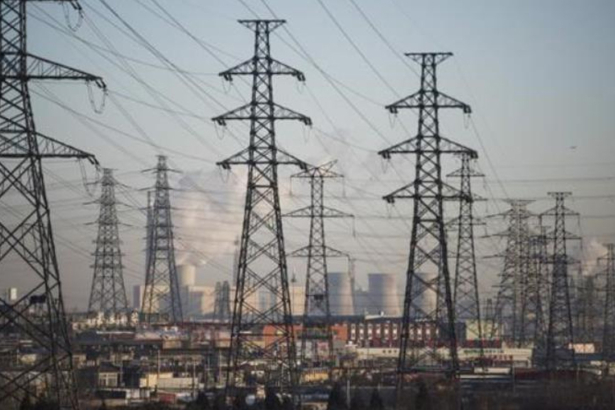

The federal government admitted in the National Assembly that thousands of electricity feeders across Pakistan are subject to prolonged load-shedding exceeding 10 hours a day, highlighting the ongoing strain on the country’s power distribution system.
During the Question Hour, Power Division Minister Awais Leghari submitted written replies detailing the scale of outages. Out of 12,665 feeders operating nationwide, 2,223 are experiencing extended load-shedding.
Widespread Load-Shedding Across DISCOs
According to the official breakdown, the highest number of affected feeders fall under Quetta Electric Supply Company (QESCO), where 604 out of 814 feeders are facing outages of over 10 hours daily.
Other distribution companies reporting prolonged load-shedding include:
Sukkur Electric Power Company (SEPCO): 407 out of 707 feeders
Tribal Electric Supply Company (TESCO): 174 out of 357 feeders
Peshawar Electric Supply Company (PESCO): 642 out of 1,376 feeders
Hyderabad Electric Supply Company (HESCO): 322 out of 747 feeders
Hazara Electric Supply Company: 37 out of 286 feeders
In contrast, the government informed the House that no feeders under Lahore Electric Supply Company (LESCO), Gujranwala Electric Power Company (GEPCO), or Faisalabad Electric Supply Company (FESCO) are currently facing load-shedding exceeding 10 hours a day.
The disparity underscores regional imbalances in power supply and recovery performance, with high-loss areas continuing to face longer outages.
Rising Consumption and Consumer Base
The Power Division further revealed that between July and December 2025, electricity consumption reached 8.78 billion units. The total number of consumers served by the country’s 11 distribution companies has climbed to 39.22 million.
Notably, the number of “protected” consumers — households benefiting from subsidized tariff slabs — has surged to 21.55 million. This marks a sharp rise from 9.5 million recorded in October 2021. Officials suggested that the increase reflects mounting financial pressure on households coping with rising tariffs, inflation, and inconsistent power supply.
Shift Towards Solar Energy
The government also highlighted a growing transition toward alternative energy sources. As of December 2025, Pakistan’s net-metering capacity had reached 7,000 megawatts, indicating substantial uptake of rooftop solar installations.
Meanwhile, off-grid solar capacity stood at 12.62 megawatts. The figures point to a steady migration of consumers to solar solutions, largely driven by unreliable grid electricity and escalating costs.
Mounting Financial Losses
Despite tariff hikes and recovery measures, the power sector continues to post heavy financial losses. The National Assembly was informed that electricity transmission losses over the past two fiscal years have exceeded Rs600 billion.
In fiscal year 2024–25, transmission losses amounted to Rs284 billion, while in FY 2023–24 they reached Rs322 billion.
Among distribution companies, Peshawar Electric Supply Company reported the highest losses at Rs96 billion. It was followed by K-Electric with Rs51 billion, Lahore Electric Supply Company at Rs46 billion, Sukkur Electric Power Company at Rs37 billion, and Hyderabad Electric Supply Company at Rs22 billion.
Circular Debt Burden
The government also disclosed that approximately Rs310 billion is being collected annually from electricity consumers to service the power sector’s circular debt. This recovery, embedded in tariffs and surcharges, continues to add pressure on households and businesses already grappling with high energy costs and frequent outages.
Following the completion of the Question Hour, the National Assembly session was adjourned indefinitely.