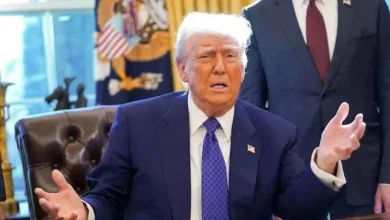
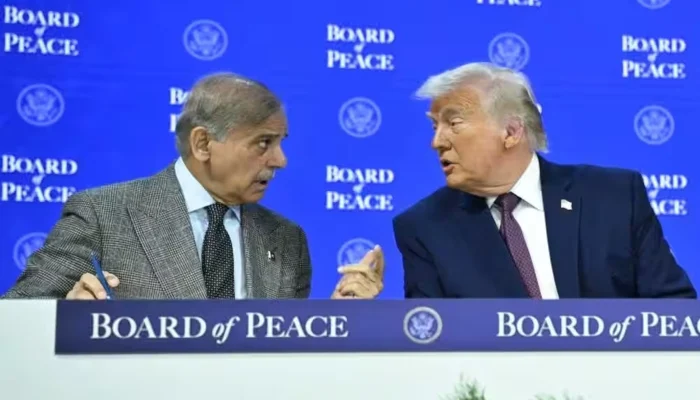

When US President Donald Trump announced the formation of the Board of Peace (BoP) in January 2026, it immediately triggered intense global debate.
Supporters portrayed it as a corrective mechanism to overcome paralysis within traditional multilateral institutions, while critics questioned its structure, lifetime chairmanship and whether it might dilute the authority of established bodies such as the UN. Yet beyond the controversy lies a more strategic question: what does the world expect from participating states, and what does Pakistan’s entry into this initiative actually signify?
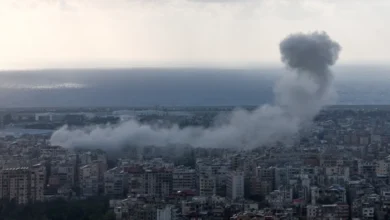
The BoP presents itself as an agile, policy-driven platform aimed at post-conflict governance, reconstruction coordination and stabilisation design, with its first full meeting of leaders and foreign ministers now scheduled in Washington on February 19. The meeting will be the first concrete test of whether the BoP can turn lofty rhetoric into actionable commitments. Central to the agenda is President Trump’s announcement of a multi-billion-dollar Gaza reconstruction fund, drawing contributions to rebuild critical infrastructure, housing and services. Delegations are also expected to discuss a UN-authorised International Stabilisation Force (ISF) for Gaza, while formalising the BoP’s internal structure, mandate and secretariat, and clarifying how it will complement existing UN-led processes.
Expectations from participating states are substantial. First, membership implies humanitarian credibility, including commitments to civilian protection, safe aid delivery and rights-based governance – particularly vital in Gaza, where humanitarian access, political inclusion and long-term stability are deeply intertwined.
Second, member states are expected to bring policy depth. The board is not intended to be ceremonial diplomacy. It aims to develop governance blueprints for transitional administrations, coordinate multinational contributions and potentially recommend stabilisation mechanisms. Countries that join must contribute operational experience, institutional insight and diplomatic seriousness.
Third, legitimacy remains central. Because the BoP operates alongside established global institutions, participating states are expected to ensure that it complements rather than undermines international law. Human rights, representation of affected populations and adherence to legal norms remain essential benchmarks of credibility.
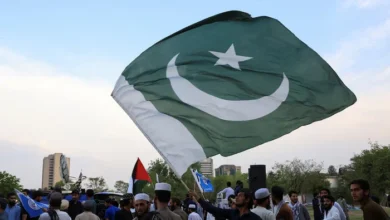
Within this framework of expectations, Pakistan’s participation carries layered meaning. Pakistan has long been among the largest troop contributors to UN peacekeeping missions, deploying more than 150,000 peacekeepers across 41 missions in 23 countries over the past six decades. This operational experience equips Pakistan with a practical understanding of how multinational peace operations function, where they fail and how they can be strengthened.
Pakistan also brings diplomatic reach. The country engages actively within the OIC and the SCO while maintaining strategic relationships with major powers. In a polarised global order, such bridge diplomacy carries value. Pakistan can speak across divides that often paralyse consensus-building.
On the question of Palestine, Pakistan’s position has long been consistent. Islamabad supports the two-state solution as the only viable framework for sustainable peace between Israelis and Palestinians, based on pre-1967 borders with Al-Quds Al-Sharif as the capital of a sovereign Palestinian state. Its participation in the Board of Peace is therefore anchored in the belief that any reconstruction or stabilisation effort must ultimately reinforce, not dilute, the political pathway towards Palestinian statehood.
There is, however, a second geopolitical dimension that observers, particularly Indian think tanks, have begun to speculate about. Some analysts in New Delhi argue that Pakistan may eventually seek to use the Board of Peace platform to raise the Kashmir dispute in international deliberations, especially if the BoP’s mandate broadens beyond Gaza as its charter allows. While the board’s current mandate centres on Gaza and related stabilisation questions, the broader ambition of creating a new peace architecture naturally invites comparisons with other unresolved conflicts. Whether Islamabad formally introduces Kashmir to the Board’s agenda or not, the perception that it could do so adds another strategic layer to its participation.
Pakistan’s entry into the Board of Peace is also both symbolic and strategic from a branding standpoint. Participation in a peace-oriented multilateral forum by a nuclear-armed Muslim state carries symbolic resonance. It signals that strategic capability and peace advocacy are not mutually exclusive. It also projects Pakistan as a responsible stakeholder willing to engage in stabilisation efforts beyond its immediate region.
At the same time, this nuclear status adds responsibility. The international community expects nuclear-armed states to demonstrate restraint, institutional maturity and commitment to international norms. Pakistan’s involvement in the board, particularly in shaping sensitive decisions on an international force in Gaza, can therefore be read as an effort to reinforce its image as a constructive actor in global security dialogues rather than merely a regional power focused on South Asian rivalries.
Pakistan also brings experience in internal stabilisation and counter-extremism. Over two decades, it has faced insurgency, non-state actors and hybrid threats, combining military action with rehabilitation and institutional reform. Despite imperfections, its lessons in counter-radicalisation, community engagement and balancing security with civil rights are relevant to post-conflict settings like Gaza.
Economic diplomacy forms another dimension of Pakistan’s potential contribution. Sustainable peace demands livelihoods, institutional trust and credible governance systems. Within the Board of Peace framework, Islamabad can advocate reconstruction models that integrate economic revitalisation with institutional strengthening, and can argue for linking Gaza’s rebuilding to broader regional connectivity and investment flows that still respect Palestinian ownership and rights.
Yet participation also requires careful calibration. Pakistan must ensure that its engagement does not create perceptions of endorsing any framework that undermines established international institutions or sidelines the UN on questions of war and peace. It must communicate clearly that its involvement is grounded in humanitarian principles, support for international law and advocacy for inclusive political solutions. Pakistani officials have already signalled that attending the inaugural BoP meeting does not constitute a blank cheque, but rather an attempt to remain present in a forum that could shape Gaza’s future while defending core principles.
Ultimately, the Board of Peace remains an evolving experiment in global governance. Its Washington meeting will show whether it can deliver credible commitments on Gaza reconstruction, security and governance without deepening existing geopolitical divides. For Pakistan, the platform offers both opportunity and scrutiny. It can transition from being primarily a contributor to peacekeeping missions to becoming a policy influencer in emerging peace architectures. It can reinforce its commitment to the two-state formula for Palestine. It can demonstrate that a nuclear-armed Muslim country can lead in peace advocacy. And it can, at least potentially, position itself within broader discussions on unresolved disputes, including Kashmir, should the forum’s mandate expand.
In a world marked by fragmentation and institutional fatigue, credibility matters. Pakistan’s joining the Board of Peace is therefore a strategic signal that combines operational experience, geopolitical positioning, and symbolic stature. Whether that signal translates into lasting influence will depend on how effectively Islamabad aligns principle with policy and symbolism with substance, starting with how it conducts itself at the Washington table.