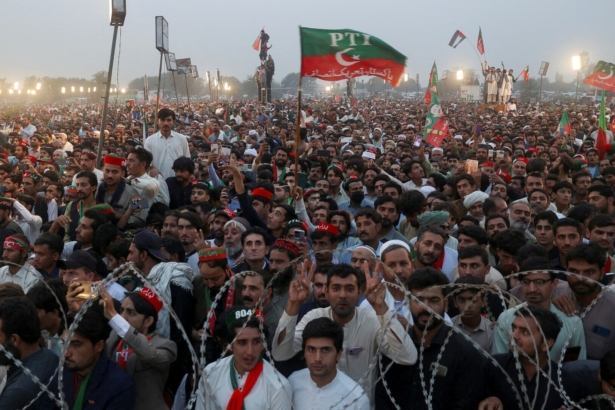

PESHAWAR: As province-wide demonstrations stretched into a fourth consecutive day, daily life across Peshawar and much of Khyber Pakhtunkhwa remained paralyzed on Monday, with residents voicing growing frustration over prolonged road closures and travel disruptions linked to protests by Pakistan Tehreek-i-Insaf.
Rather than large rallies, the protests have increasingly relied on blocking key arteries, effectively bringing intercity movement to a halt. Commuters described hours-long delays, missed workdays, and cancelled appointments as containers, barricades, and parked vehicles were placed at critical junctions. Traders reported sharp drops in business, while transporters warned of mounting losses due to immobilized fleets.
One of the most disruptive measures was the complete closure of the Attock Bridge at Khairabad in Nowshera, severing a principal link between Khyber Pakhtunkhwa and Punjab. Authorities confirmed that additional shutdowns were enforced on multiple corridors, including routes connecting Dera Ismail Khan to Bhakkar, Lakki Marwat to Mianwali, the Abbottabad–Havelian Interchange on the Hazara Motorway, and the Kohat–Pindi Road at Khushal.
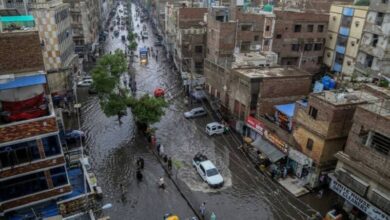
Traffic diversions have pushed thousands of vehicles onto already congested alternatives. Buses and private cars travelling from Swat, Peshawar, and Mardan were rerouted via Ghazi, triggering kilometer-long queues on Tarbela Road and around Ghazi Bazaar. Passengers, including women and children, were seen waiting for hours with limited access to food, water, or washrooms. Emergency services faced particular difficulty, with ambulances struggling to navigate stalled traffic.
The pressure was also felt beyond the province. In Islamabad, traffic movement was restricted near Mianwali Peak Road, the York Toll Plaza, and the CPEC Interchange. Officials said that the closure of the Tarbela–Ghazi Motorway at the Swabi Interchange diverted the entire flow onto Tarbela Road, overwhelming local infrastructure and affecting nearby communities.
Civil society groups and residents have urged protest organizers to reconsider tactics that disrupt essential services, calling for demonstrations that do not impede emergency movement or daily livelihoods. Meanwhile, district administrations say they are monitoring the situation and exploring temporary relief measures, but warned that sustained blockades could further strain public patience and the regional economy if the standoff continues.