
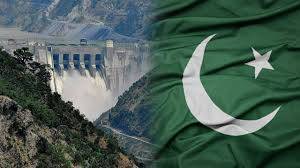

The federal government has formulated a comprehensive strategy to counter Indian water aggression, with a renewed focus on strengthening national water security through the construction of small reservoirs across the country.
According to official sources, the government intends to build consensus among the provinces to address worsening water shortages and fast-track the construction of small dams, 24NewsHD TV channel reported on Wednesday.
Prime Minister Shehbaz Sharif has decided to entrust his adviser, Rana Sanaullah, with the critical responsibility of engaging political and provincial stakeholders to secure a broad-based agreement on the proposed initiatives.
Sources said the federal government will proceed only after taking all four provinces, as well as Azad Kashmir and Gilgit-Baltistan, into confidence.
Rana Sanaullah will oversee consultations between the federation and provincial governments, ensuring that differences are resolved and that a unified national approach is adopted to tackle water scarcity.
Officials confirmed that the process of consultation has already begun. As part of the strategy, projects that are already under construction will be completed on a priority basis to enhance storage capacity and mitigate the effects of recurring water shortages.
The emphasis on small and medium-sized reservoirs is being seen as a practical step to supplement major dams and improve local water management.
It is worth mentioning that the Indus Waters Treaty, signed on September 19, 1960, between Pakistan and India with the mediation of the World Bank, faces renewed uncertainty as India placed it in “abeyance” in 2025.
Under the treaty framework, the Indus River system was divided through what experts describe as a hydraulic partition. The three eastern rivers, including Ravi, Beas and Sutlej, were allocated to India for unrestricted use, while the three western rivers, including Indus, Jhelum and Chenab, were allocated to Pakistan.
India was permitted limited use of the western rivers for non-consumptive purposes such as domestic consumption, certain irrigation needs, and run-of-the-river hydroelectric projects that do not involve water storage.
To manage technical matters and resolve disputes, the treaty established the Permanent Indus Commission, comprising one commissioner from each country. The commission has historically served as a forum for dialogue and data exchange, even during periods of heightened political tension between the two neighbours.