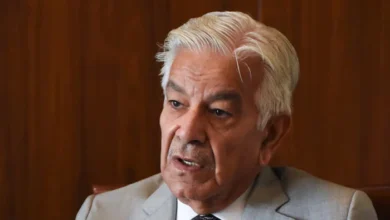
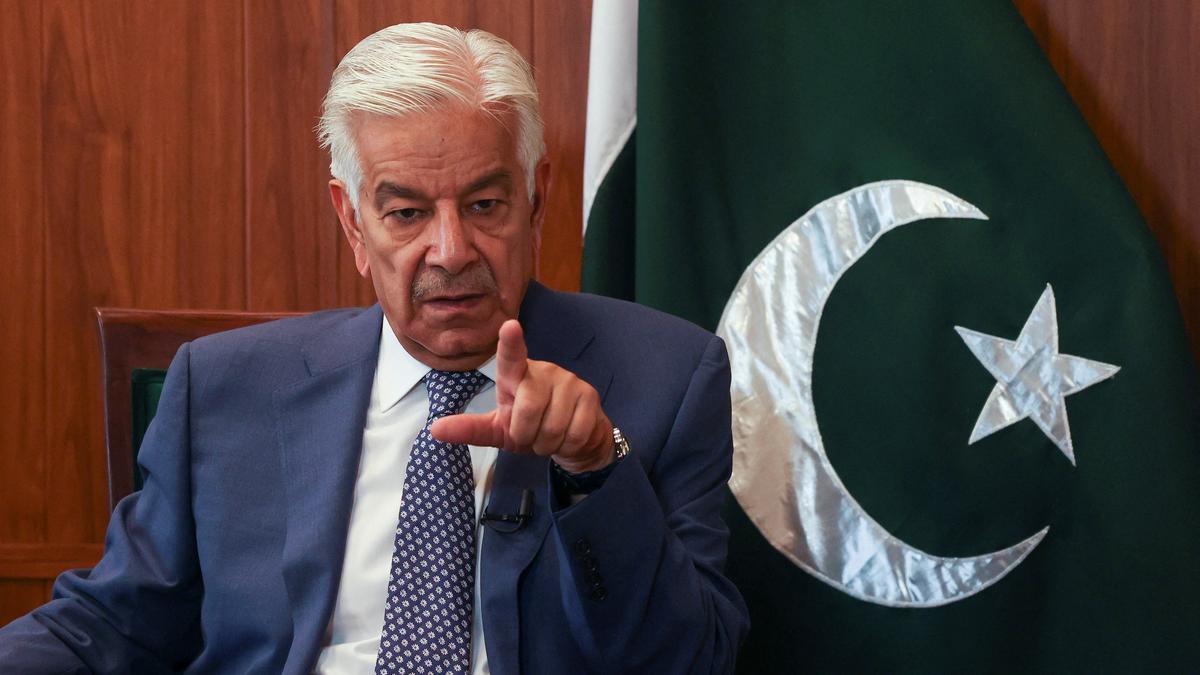

Defence Minister Khawaja Asif has said Pakistan will not hesitate to carry out further air strikes inside Afghanistan if militant groups continue to launch attacks from Afghan territory.
In an interview with France 24, he made it clear that cross-border action remains an option. He said Pakistan’s priority is peace. But he warned that patience has limits. If Kabul fails to act against armed groups, Islamabad will respond.
He stated that any attack inside Pakistan that originates from Afghan soil makes the Afghan authorities responsible. He added that Afghanistan’s rulers control the country and cannot deny accountability for militant activity.
The statement comes after a major suicide bombing at Islamabad’s Imambargah Khadijah al-Kubra during Friday prayers. At least 36 people were killed. Nearly 170 others were injured. It was one of the deadliest attacks in the capital in years.
Security agencies launched immediate operations in Khyber Pakhtunkhwa. Several facilitators were arrested in Nowshera and Peshawar. Officials said the suspected mastermind was an Afghan national with links to extremist networks. Authorities claimed the attackers had received training across the border.
Interior officials said intelligence agencies had prior information about suspicious activity. Investigations are ongoing. Security has been tightened nationwide.
Afghan officials have previously accused Pakistan of conducting air strikes in Nangarhar, Khost, Kunar and Paktika provinces. Kabul summoned Pakistan’s ambassador to protest. Islamabad denied targeting civilians and rejected claims of covert operations.
Despite these denials, tensions between the two neighbours have steadily increased. Pakistan maintains that militant safe havens exist in Afghanistan. Kabul has repeatedly rejected the allegation.
Asif said multiple groups are operating inside Afghanistan. He named the Tehreek-e-Taliban Pakistan (TTP), Daesh affiliates and other smaller factions. He claimed these groups are active because of Kabul’s failure to act decisively.
The defence minister also accused India of backing anti-Pakistan elements. He alleged that New Delhi is engaged in a proxy strategy. He referred to last year’s brief military confrontation between the two countries. He claimed Pakistan had responded effectively at that time.
He said relations with India remain frozen. There is no direct or indirect contact. He warned that war remains “a possibility” if tensions continue to rise.
India has consistently denied supporting militant activities against Pakistan.
Asif said Pakistan sought diplomatic solutions. Friendly countries tried to mediate. Meetings were held in Istanbul, Doha and Kabul. He said Afghan representatives acknowledged that TTP elements were present on their soil. However, he claimed they admitted limited control over them.
Pakistan offered cooperation. It asked Kabul to take action. He said if Afghanistan cannot control the groups, Pakistan may have to act itself.
On international issues, Asif said Pakistan is open to participating in any potential peace mission for Gaza under United Nations arrangements. He highlighted Pakistan’s long history in UN peacekeeping missions across Africa and other regions.
He reaffirmed strong support for Palestine. He said normalization with Israel would not be considered unless Palestinians receive the right to self-determination under a two-state solution.
Addressing domestic politics, Asif described the system as cooperative. He said there is no military rule. He called it a hybrid arrangement where institutions work together with the elected government. He stressed that the prime minister remains the final authority.
Recent United Nations monitoring reports have noted increased cross-border attacks by the TTP. Pakistan says these findings support its long-standing concerns. Violence has also risen in Balochistan and Khyber Pakhtunkhwa.