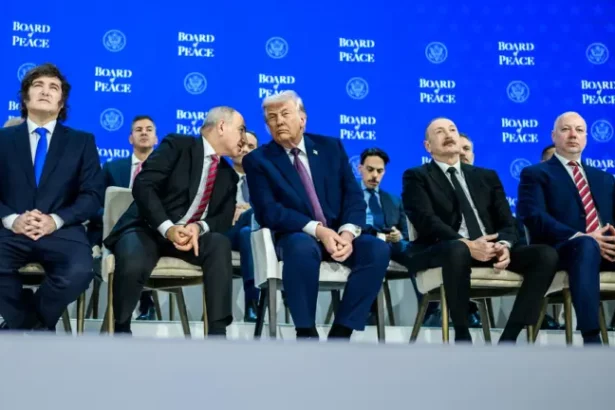

WASHINGTON: President Donald Trump will preside over the inaugural session of his newly created Board of Peace on Thursday, with unresolved questions about Gaza dominating the agenda. Delegations from 47 countries and the European Union are expected to attend, though permanent UN Security Council members such as France, Britain, Russia and China will not be present.
The meeting will take place at the Donald J. Trump US Institute of Peace in Washington, where Trump is set to announce that participating nations have pledged $5 billion for Gaza’s reconstruction. Gulf allies Kuwait and the United Arab Emirates are expected to contribute $1.2 billion each.
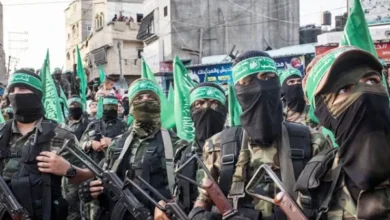
Key challenges remain. Disarming Hamas militants, establishing a functioning police force, and scaling up humanitarian aid are seen as prerequisites for progress. Senior US officials said several nations plan to send thousands of troops to form an International Stabilisation Force, but deployment hinges on Hamas giving up its weapons.
Trump’s Gaza plan, which produced a fragile ceasefire last October, calls for demilitarisation and reconstruction. However, Hamas has resisted disarmament, fearing Israeli reprisals. A senior US official acknowledged the difficulties but said mediators had reported some encouraging signs.
The board has drawn criticism for including Israeli but not Palestinian representatives, raising concerns it could undermine the UN’s role in global diplomacy. Former British prime minister Tony Blair is expected to play a senior role, alongside US envoys Steve Witkoff and Jared Kushner, Secretary of State Marco Rubio, and UN envoy Nickolay Mladenov.
Aid distribution remains another unresolved issue. One board member described the current flow of humanitarian assistance as “disastrous,” warning that even if supplies increase, it is unclear who will manage delivery.
The meeting highlights both the ambition and the fragility of Trump’s initiative, as Gaza’s future hinges on security, reconstruction and political legitimacy.