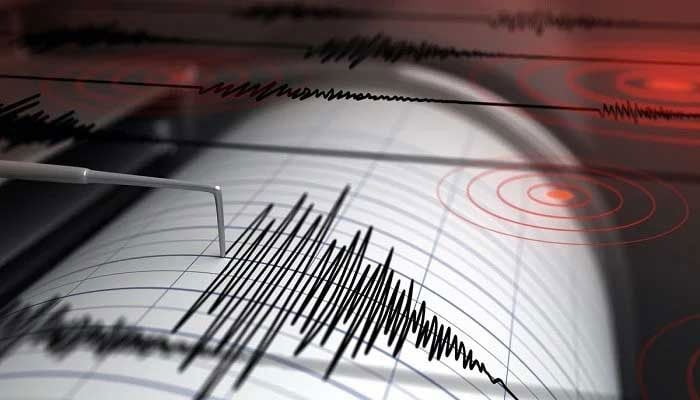

A 4.4-magnitude earthquake on Saturday rattled Islamabad along with other areas, including Attock and Khyber Pakhtunkhwa’s Swabi.
As per the National Seismic Monitoring Centre, the epicentre of the quake was at a depth of 14 kilometres and was located at a distance of 11 kilometres northeast of Burhan area in Attock.
No loss of life or damage to property has been reported so far from the tremors.
The quake hit for the second time in 24 hours as a 5.6-magnitude earthquake struck parts of KP and Punjab with tremors felt in several cities, including Peshawar and Islamabad on Friday evening.
The last quake’s epicentre was located in Afghanistan’s Hindu Kush region at a depth of 73 kilometres, the seismological centre said.
Pakistan’s susceptibility to earthquakes stems from its location along the boundary of the Indian and Eurasian tectonic plates. The country has experienced multiple devastating quakes in recent decades.
On January 19, 2025, a 5.8-magnitude earthquake rattled Islamabad, Swat, and Hunza, while the 2005 quake in Azad Kashmir killed over 73,000 people and left millions homeless. Balochistan also suffered in 2021, when a quake in Harnai killed at least 20 people and hampered rescue operations due to landslides.
Experts warn that the rugged terrain of Pakistan’s earthquake-prone areas complicates relief efforts and makes preparedness critical. The recent tremors in KP and Punjab serve as a reminder of the ongoing seismic threat in the region.
Before that, a moderate earthquake measuring 5.2 struck parts of Karachi and Balochistan in December 2025.
On the same day, a 3.2-magnitude earthquake rattled Balochistan’s Sibi city and surrounding areas, with its epicentre 53 kilometres away from the city, with no reports of any casualties or damage.
Pakistan has long been vulnerable to natural disasters, from the 2005 northern quake that killed 73,000 to the devastating 1935 earthquake in Quetta, which claimed around 30,000 lives.
Balochistan province largely sits along a seismic hotspot, where the Indian plate pushes against the Eurasian plate.
Country’s largest province in area remains sparsely populated, making rescue and relief operations especially difficult.