
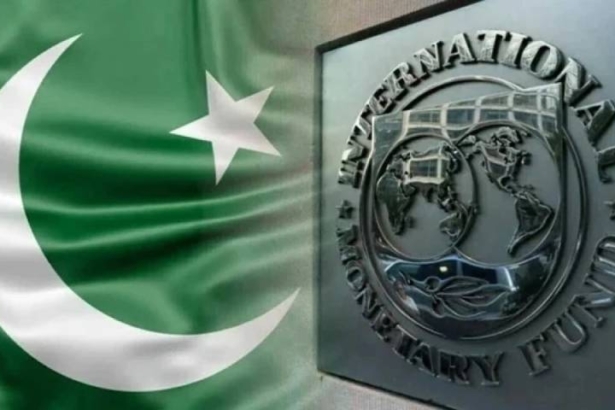

Pakistan is set to host a key review delegation from the International Monetary Fund (IMF) starting tomorrow, as the global lender begins its third half-yearly assessment under the ongoing loan programme.
According to officials at the Ministry of Finance, the IMF mission will remain in the country until March 11. The review process will unfold in two phases, beginning with technical-level discussions in Karachi before moving to policy-level talks in Islamabad. During the visit, the delegation will assess Pakistan’s economic performance for the first half of the current fiscal year, spanning July to December, and hold consultations on the fiscal roadmap for 2026–27.
Focus on Fiscal Framework and Budget Planning
The discussions will center on key elements of the upcoming federal budget, including revenue projections, expenditure management, and coordination with provincial governments on the broader fiscal framework. Officials indicated that while most structural and quantitative benchmarks have been achieved, tax revenue collection remains a major area of concern.
Sources in the Finance Ministry revealed that the IMF will examine progress on fiscal reforms, energy sector restructuring, and governance measures. Anti-corruption initiatives and reforms in institutional appointments — including procedures related to the National Accountability Bureau (NAB) — are also expected to come under scrutiny.
Tax Shortfall Remains a Challenge
Despite improvements in several macroeconomic indicators, the Federal Board of Revenue (FBR) has struggled to meet its revenue targets. In the first six months of the fiscal year, the FBR recorded a shortfall of Rs329 billion, which widened to Rs372 billion over seven months.
The annual tax collection target has already been revised downward from Rs14,131 billion to Rs13,979 billion. Officials confirmed that a proposal to further rationalize the annual target is under consideration. Authorities are also counting on additional revenue from the super tax to bridge part of the gap.
However, the government maintains that the overall IMF programme remains on track, even in the face of economic pressures and challenges, including the impact of recent floods.
Macroeconomic Indicators Show Stability
According to Finance Ministry data, Pakistan achieved a primary fiscal surplus of approximately 1.3 percent of GDP during the review period. Provincial governments collectively generated a cash surplus of Rs1,180 billion and successfully met their respective tax collection targets.
The current account balance remained in surplus, while foreign exchange reserves stayed above the programme’s stipulated threshold. Large-scale manufacturing recorded growth of around 6 percent between July and November, signaling a modest recovery in industrial activity.
Inflation trends, exchange rate stability, and social protection measures will also be evaluated during the review. The government is expected to brief the IMF mission on steps taken to strengthen transparency, including reforms aimed at curbing corruption within tax administration and advancing plans for public disclosure of asset declarations by government officials.
Ongoing Loan Programme
The current review is part of Pakistan’s broader engagement with the IMF under the $7 billion Extended Fund Facility (EFF) and the $1.4 billion Resilience and Sustainability Facility (RSF). Together, the programmes amount to $8.4 billion, of which Pakistan has so far received $3.3 billion.