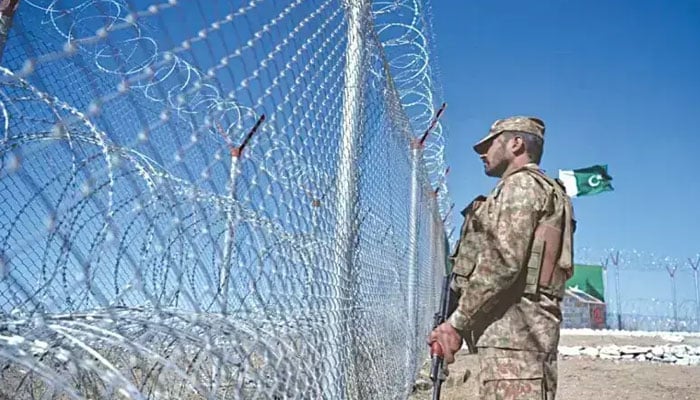

Amid simmering tensions between Islamabad and Kabul, the Afghan Taliban regime resorted to unprovoked firing along the Pakistan-Afghanistan border, said Prime Minister’s spokesperson for Foreign Media Mosharraf Zaidi.
In a statement issued Tuesday night on X, Zaidi said that the Afghan Taliban regime initiated firing in the Torkham and Tirah sub-sectors of Khyber Pakhtunkhwa.
The aggression, he added, was met with immediate and effective response by Pakistan’s security forces, which silenced the Afghan side.
Warning that “any further provocation will be responded to immediately and severely,” the PM’s spokesperson reaffirmed the country’s resolve to continue to “protect its citizens and guard its territorial integrity”.
Terrorism at core of Pak-Afghan tensions
The latest round of Pakistan-Afghan tensions comes against the backdrop of Pakistan’s retributive response to suicide bombing incidents in Islamabad, Bajaur and Bannu — all of which were linked to terrorists operating from the Afghan soil.
Islamabad, which has repeatedly urged Kabul to prevent its soil from being used by terrorist organisations to carry out attacks, conducted intelligence-based strikes targeting seven terrorist camps and hideouts belonging to Fitna al Khawarij (FAK) — a term used for the banned Tehreek-e-Taliban Pakistan (TTP) — its affiliates and the Daesh-Khorasan, along the Pakistan-Afghanistan border last week.
Security sources later confirmed that more than 80 militants were killed in the strikes, which had hit “New Centre No. 1 and New Centre No 2 in Nangarhar, Khwariji Maulvi Abbas Centre in Khost, Khwariji Islam Centre, Khwariji Ibrahim Centre in Nangarhar, and Khwariji Mullah Rahbar and Khwariji Mukhlis Yar in Paktika”.
The recent border tensions reignited months after the two countries agreed to a ceasefire in October 2025 when the Afghan Taliban regime opened unprovoked gunfire at several border points.
The Afghan forces’ firing was aimed at helping Khawarij formations cross the border into Pakistan.
In response, Pakistan s retaliated swiftly, striking Afghanistan’s border posts and terrorist hideouts across multiple border points overnight, destroying several Afghan posts and inflicting heavy losses.
The Pakistan Army further carried out precision strikes against key Taliban positions in Afghanistan’s Kandahar province, successfully destroying multiple strongholds, including Battalion No 4 and Border Brigade No 6, both of which were completely destroyed.
Pakistan’s self-defence action resulted in the elimination of over 200 Afghan Taliban and affiliated militants.
Islamabad, however, back then had agreed to an initial ceasefire at Kabul’s request. The countries then later reached a ceasefire deal in Qatar, which was mediated by Doha and Turkiye.
Under the agreement, terrorism from Afghanistan on Pakistani soil was to be stopped immediately.
The two sides then further held follow-up discussions in Turkiye which did not deliver the desired results due to stubbornness from the Afghan side, as Kabul used the Istanbul talks to malign Pakistan rather than address Islamabad’s core concern of terrorism emanating from Afghan soil.