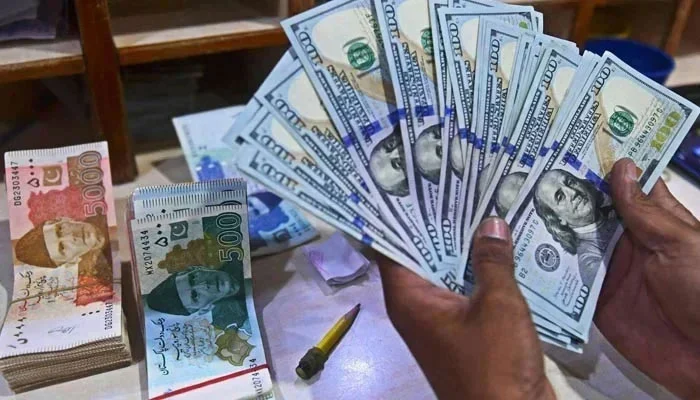

KARACHI: The escalating Middle East conflict threatens to drop Pakistan’s remittances by 10 % to 15%, analysts warn, potentially widening the current account deficit and putting pressure on the local currency.
The US and Israel conducted airstrikes in Iran over the weekend, resulting in the martyrdom of Supreme Leader of Iran Ayatollah Ali Khamenei along with other top civil and military leaders. In response, Tehran launched missile barrages, and US President Donald Trump indicated that the operations against Iran could persist for weeks.
A prolonged conflict has driven up energy prices and disrupts global markets, causing Pakistani stocks to plunge by 9.5%. Iran has aggressively targeted several US bases in Gulf countries, which Pakistan heavily depends on for remittances. Additionally, US and Israeli attacks on Iran have disrupted travel, suspended flights, and increased insecurity for millions of Pakistanis living in the Gulf.
“If the conflict continues, remittances could fall by 10 % to 15% or more,” said Shahid Anwar, senior director, research and publication department at the Institute of Cost and Management Accountants of Pakistan.
“A 15% decline would mean a shortfall of around $3 billion, widening the current account deficit and putting additional pressure on the rupee,” Anwar said. “Families relying on these funds could face tighter budgets, delayed education, and reduced access to healthcare”.
Remittances are more than just numbers on a balance sheet — they sustain millions of households, according to Anwar. “This crisis underscores how closely Pakistan’s economic resilience depends on Gulf stability. Expanding labour markets beyond the Gulf and safeguarding formal remittance channels are more critical than ever,” he said.
Remittances from Pakistani workers employed abroad increased to $23.2 billion in the first seven months of the fiscal year 2026, up 11% from a year earlier. The State Bank of Pakistan forecasts remittances to rise to $41.2 billion in FY26, with further gains expected due to Eid festival-related inflows.
During July-January FY26, Pakistan received $10.88 billion (46.9%) in remittances from Gulf countries. Saudi Arabia contributed $3.89 billion (16.8%) and the UAE $4.78 billion (20.6%). Oman, Qatar, Kuwait and Bahrain together sent $2.2 billion (9.5%).
While total remittances have grown, the Gulf’s share has slightly declined from 54.5% in FY25 to 46.9% in FY26 so far. This underscores Pakistan’s vulnerability from concentrating remittances in a single region now engulfed in conflict.
Pakistan’s recent macroeconomic stabilisation, supported by import compression and strong remittance inflows under the seven billion-dollar IMF programme, is now under strain. Rising oil prices, trade disruptions, currency volatility, and potential remittance shortfalls are converging at the same time, said Anwar.
“Even if the Gulf conflict remains limited, its effects will be felt across households, businesses, and government finances for months. The next few months will be decisive in testing whether Pakistan can withstand these shocks or if two years of hard-won gains could be reversed”.
Anwar believes that tensions along Pakistan’s western border with Afghanistan add an additional layer of risk. While these tensions do not have a direct impact on oil or trade, they do raise the overall country risk, delay investments, and put a strain on fiscal resources. The combination of instability in the Gulf and border tensions could lead to a decrease in investor confidence and trigger capital outflows, even if a full balance-of-payments crisis does not occur immediately.
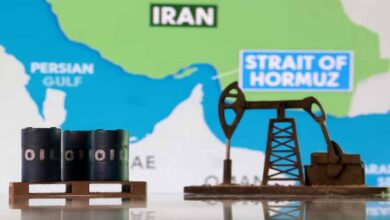
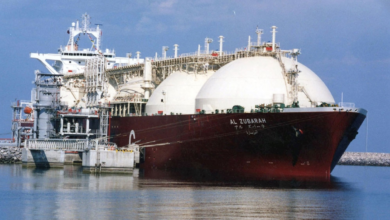
Iran has reportedly attacked vessels in the Strait of Hormuz, which is responsible for 20%t of the world’s oil supply. As a result, Brent crude, the global benchmark for oil prices, surged by 10% to over $82 a barrel.
Pakistan’s annual petroleum imports stand at $15-16 billion, according to Topline Securities, which expects a 10% change in oil prices could increase the petroleum import bill by $1.5-1.6 billion.
“The rising oil prices will also impact inflation, directly and indirectly both. Every 10% increase in crude oil prices may elevate inflation estimates by 40-50bps considering the direct impact on fuel prices and edible oil,” it said.
The report stated that expectations of rising import costs, coupled with growing concerns in the Middle East — which constitutes over 50% of total remittances — may lead to a depreciation of the Pakistani rupee. However, it also suggests that due to significant improvements in the country’s credit rating and the SBP’s proactive foreign exchange interventions, SBP’s reserves remain at a comfortable level.