

ISLAMABAD: The federal government is reportedly considering online classes among other measures under the “national action plan” to bring changes to work and education routines across the country in a bid to conserve energy and streamline operations.
According to sources privy to the development, along with digital learning, measures such as reduced office attendance, remote work for corporate and IT sectors, and other energy-saving initiatives could be implemented starting March 2026.
Similar sorts of measures were adopted during the Covid-19 pandemic.
Officials revealed that educational institutions may conduct online sessions starting in March 2026 to reduce energy consumption and physical attendance.
Similarly, the corporate sector is exploring the possibility of allowing employees to work online for two days a week. Telecom and IT companies are also reportedly evaluating a similar schedule.
Government offices may implement a policy requiring only essential staff to be physically present, with the rest working remotely. Various proposals, including shared rides for office staff and online services for potential employees, are also being considered to further minimise energy usage.
The initiatives aim to balance operational efficiency with energy conservation, while also promoting flexible working arrangements across both public and private sectors.
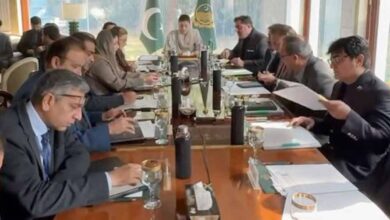
Meanwhile, Pakistan has activated an emergency economic response with Prime Minister Shehbaz Sharif constituting an 18-member high-level committee to oversee the impact of rising international oil prices on the country’s economy in the wake of the US-Israel attack on Iran.
The committee has been formed after international oil prices showed an upward trend amid the evolving regional situation.
The body has been formed to monitor price volatility and devise a mitigation strategy for Pakistan’s economy, an official notification read.