
The Middle East conflict has escalated to a new level. On Friday, the Israeli army struck Hezbollah-controlled areas in the southern part of the Lebanese capital, Beirut, while Iran retaliated with missile strikes on the Israeli city of Tel Aviv. This is a further escalation of the conflict, now in its seventh day, with over a thousand people killed in Iran and many more in Lebanon.
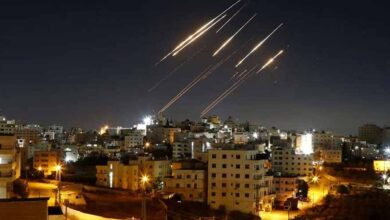
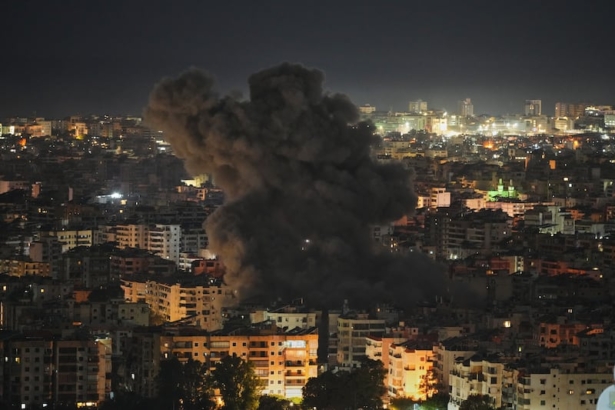
The southern part of the Lebanese capital, Beirut, was illuminated with the strikes of the Israeli army, which carried out 26 strikes targeting Hezbollah command centers and arms stores. This is part of the Israeli military campaign targeting Iranian and Hezbollah forces, indicating a “new phase” in the conflict between the two countries.
The Iranian Islamic Revolutionary Guard Corps struck Tel Aviv with Kheibar missiles, part of the 21st wave of the Iranian military campaign, Operation True Promise 4. The Iranian military campaign also struck the U.S. Al Udeid Air Base in Qatar, the largest U.S. military airbase in the Middle East. However, there were no reported casualties in the attack carried out by Iranian drones on the airbase.
Iranian forces also struck the Israeli Ramat David airbase, a radar facility, and the Al-Adiri camp in Kuwait, which is home to the U.S. military forces. Iranian forces also struck a U.S. military base in the Iraqi city of Erbil with a drone. According to the Iranian Revolutionary Guard Corps, “the enemy should expect painful blows in every operational wave,” said Brigadier General Ali Mohammad Naeini, the IRGC spokesperson, adding that Iran has not used the full capacity of its new weapons.
The war has now spilled over into other areas beyond the original theater of war between Israel and Iran. Iran is said to have attacked Israel, the Gulf nations, Cyprus, Turkey, and Azerbaijan. The war also reached the Indian Ocean, where the Iranian vessel was attacked by the US submarine near Sri Lanka, killing 87 Iranian sailors. The Iranian vessel was heading to take part in the International Fleet Review 2026 in India. It was said to be unarmed.
In another development, the Iranian Deputy Foreign Minister, Saeed Khatibzadeh, in New Delhi, said that the war between the two nations was an existential war. He said that Iran was fighting the war in retaliation for the attacks made by the US. “We have no choice but to respond wherever American attacks originate,” he said. Meanwhile, Hezbollah issued a warning to Israeli citizens within 3 miles of the Lebanese border, urging evacuation before further strikes.
The human toll continues to rise. According to the Iranian Red Crescent Society, at least 1,230 people have died since the conflict began, including 175 school children who died in a missile strike on the Iranian port of Minab. In Lebanon, 123 people have died, with hundreds more injured due to the strikes carried out by the Israelis. Thousands have been forced to leave their homes in the southern part of the country. Civilians in the Iranian city of Shiraz have also been affected, resulting in the death of 20 people, with 30 others injured due to the US-Israeli strikes that hit the Zibashahr neighborhood. Over 3,600 homes have been damaged, along with other commercial and medical establishments, according to the Iranian authorities.
In the middle of the conflict, US President Donald Trump weighed in, saying that the Iranian government needed an overhaul following the killing of Supreme Leader Ayatollah Ali Khamenei. Trump said that the idea of Khamenei’s son, Mojtaba, succeeding the Supreme Leader was out of the question, calling him a lightweight. He also said that the US would have a say in who the new Iranian leader would be, one who would ensure harmony and peace in the country. He also said that the US would support the Kurdish militias in Iraq, which would step up their attacks on the Iranian forces along the border between Iran and Iraq.
Regarding the Israeli front, Lt. Gen. Eyal Zamir, the Israeli military chief, said that the US-Israeli strikes against Iran would now move into a new phase, which would see the complete dismantling of the Iranian regime infrastructure. US Defense Secretary Pete Hegseth said that the firepower that would descend on Tehran would increase in the coming days.
The conflict has created ripples across the international scene. Azerbaijan is planning a retaliatory strike after Iranian drones entered its territory, injuring four people. Qatar has downed an Iranian drone heading towards its Al Udeid Airbase, while Saudi Arabia has reportedly downed three ballistic missiles. In another development, the Indian Ocean strike on an Iranian frigate has raised concerns about the safety of neutral maritime exercises and international maritime protocol.
The energy market has also felt the brunt of the conflict. Iran claims sovereignty over the Strait of Hormuz, a critical oil passageway, while the US has hinted at escorting ships through the strait to ensure safe passage. Airlines and freight companies have also been forced to reroute their routes due to the soaring risks.
Despite the appeals for the ceasefire, the Iranian Foreign Minister, Mr. Abbas Araghchi, will not sit at the negotiating table, as he claimed that Iran will continue with the retaliatory strikes against Israel and its allies. The analysts have indicated that the threats of “new” weapons from Iran could potentially lead to a greater conflict in the region, should the conflict continue to escalate.
On the seventh day of the conflict, the region remains at the edge of their seats, and there is still no indication of the conflict dying down. The conflict seems to suggest that the parties involved are in for the long haul, although there is no clear indication of when the conflict will end.

The Iranian Brigadier General Naeini was very clear when he stated, “Every operation will deliver painful blows. What you’ve seen is only a fraction of our capabilities,” although the conflict is also causing a nightmare for the people in the region, considering the displaced families and the destruction of the infrastructure and the increasing death toll.