
Wars in the Middle East have a persistent habit of spreading far beyond their geographic boundaries. They move through tankers, freight routes and financial markets, eventually landing on the balance sheets of distant economies.
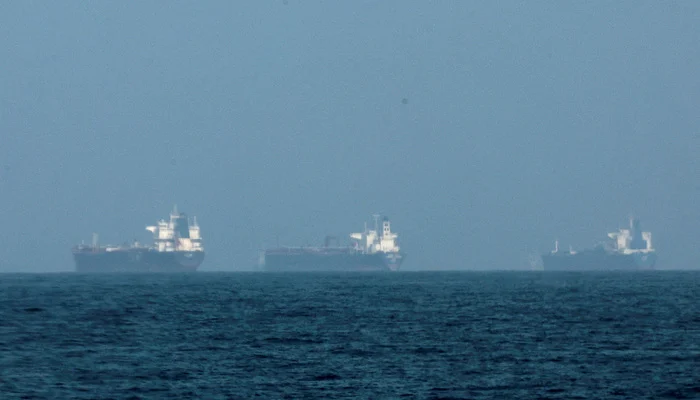
The recent US-Iran confrontation has triggered exactly such a moment. As tensions escalate across the Gulf, global oil prices have surged, pushing Brent crude toward the $90-per-barrel range amid fears of disruptions to maritime flows. At the centre of global concern lies the Strait of Hormuz, through which nearly 20% of the world’s traded crude oil moves each day.
For Pakistan, a country that imports the overwhelming majority of its petroleum requirements, the implications are immediate and serious. Pakistan’s economy consumes roughly half a million barrels of petroleum every day, yet domestic crude production remains modest. In FY26, national crude output is estimated at around 63,000-64,000 barrels per day, based on production data reported by OGDCL, which alone produces about 31,800 barrels per day, roughly half of the country’s output. In simple arithmetic, barely one barrel out of every ten consumed in Pakistan is produced locally, leaving the rest dependent on overseas shipments.
The economic impact of such crises quickly appears in trade statistics. According to sector data for July-December FY26, Pakistan recorded petroleum sales of roughly 8.99 million tonnes, with domestic consumption accounting for about 7.96 million tonnes during the first half of the fiscal year. Transport continues to dominate petroleum demand, consuming over 7.5 million tonnes of fuel products during this period. Motor gasoline alone accounted for roughly 3.85 million tonnes, while high-speed diesel reached about 3.58 million tonnes, highlighting the heavy dependence of Pakistan’s transport and logistics system on imported fuels.
These consumption patterns translate directly into exposure to imports. Petroleum imports routinely account for a large share of Pakistan’s import bill, often exceeding $15 billion annually, depending on global prices. Official economic data indicate that during July-December FY26, imports of petroleum crude increased by about 11%, while petroleum product imports rose roughly 5.0% year-on-year, reflecting both rising domestic demand and global price pressures. When international prices spike, Pakistan must either absorb the higher cost through its foreign exchange reserves or pass the increase to consumers through higher domestic fuel prices. Both choices carry consequences.
Pakistan’s downstream oil infrastructure is substantial but not immune to external volatility. The country’s refining sector has an installed capacity of roughly 20 million tonnes per year, equivalent to about 400,000 barrels per day. Major refineries include Cnergyico with a capacity of about 156,000 barrels per day, PARCO at 120,000 barrels per day, Attock Refinery at roughly 53,000 barrels per day, Pakistan Refinery around 50,000 barrels per day and National Refinery with about 66,000 barrels per day. However, refinery utilisation has often remained below optimal levels due to technical constraints and product imbalances. During July-December FY26, refineries produced roughly 5.75 million tonnes of energy products, suggesting utilisation levels still below full potential.
In moments like this, the immediate challenge for policymakers is not to defeat global oil markets but to prevent an external shock from becoming a domestic economic crisis. This requires a combination of supply discipline, fiscal prudence and demand management.
The first priority is to ensure uninterrupted supply and prevent panic in domestic markets. Oil marketing companies should be required to maintain minimum operational inventories equivalent to at least two to three weeks of national consumption, with tighter monitoring by Ogra. Pakistan currently relies largely on commercial storage rather than a large strategic petroleum reserve. In the short term, enforcing stricter stockholding requirements can reduce the risk of artificial shortages and speculative hoarding.
Second, the domestic fuel pricing mechanism must shift towards a transparent shock-absorption formula. Instead of abrupt adjustments, policymakers could adopt a temporary price smoothing corridor, allowing only part of the global price shock to pass through immediately while spreading the remainder across subsequent pricing cycles. This mechanism can utilise adjustments in petroleum levies or temporary fiscal buffers to prevent sudden inflationary spikes while maintaining fiscal credibility.
Third, relief must be targeted rather than universal. Blanket fuel subsidies are fiscally costly and often disproportionately benefit higher-income consumers. A more effective approach is to shield sectors with large economic spillovers. Diesel used in agriculture, freight transport and public transit should be prioritised because these sectors anchor food supply chains and urban mobility.
However, an additional complication arises from the low price elasticity of petroleum demand in Pakistan. Empirical research by the Sustainable Development Policy Institute (SDPI) suggests that demand for transport fuels, particularly diesel, is relatively price inelastic in the short run. Studies indicate that a 1.0% increase in diesel prices may reduce consumption by only around 0.1% to 0.2%. This means that raising fuel prices alone is unlikely to generate a large reduction in overall demand in the immediate term. Instead, most of the adjustment occurs through higher transport costs and broader inflationary pressures.
This reality has important policy implications. While some degree of price pass-through is necessary to prevent shortages and protect fiscal balances, relying solely on price signals to reduce oil consumption would be ineffective and socially costly. When demand is structurally inelastic, prices can signal scarcity but cannot substantially compress consumption in the short run. Consequently, price policy must be complemented by administrative and behavioural measures that reduce marginal demand.
Demand management must therefore become part of the policy toolkit. Government departments can reduce non-essential fuel consumption through strict fleet management and travel restrictions. Urban policy interventions such as staggered working hours, remote work arrangements and improved public transport scheduling in major cities can modestly reduce peak fuel consumption. Even a 2-3 per cent reduction in national fuel demand can meaningfully ease pressure on imports during periods of price spikes.
Yet one feature distinguishes the present crisis from routine price volatility: uncertainty. Oil markets during geopolitical conflict behave less like predictable markets and more like moving targets. Policymakers cannot know whether prices will stabilise in weeks, whether shipping disruptions will intensify or whether freight and insurance premiums will escalate further. In such an environment, relying on a single forecast becomes risky. The more prudent approach is scenario-based planning.
Pakistan should therefore adopt a short-term energy risk management framework built around defined triggers. One scenario may assume a temporary price spike, another a prolonged disruption in Gulf shipping routes, and a third a combined shock involving higher oil prices, higher freight premiums and exchange-rate pressure. Policy responses should then be linked to thresholds. If crude prices cross a defined level, petroleum levies may automatically adjust. If stock cover falls below a minimum number of days, emergency demand management and supply diversification measures can activate.
A practical step would be to establish a petroleum risk monitoring cell that brings together the Petroleum Division, the Finance Ministry, the State Bank, Ogra, refineries and oil marketing companies. Such a mechanism could monitor cargo arrivals, international price movements, inland stocks, freight premiums and exchange-rate risks in real time.
Yet beyond these immediate responses lies a deeper lesson. Each geopolitical crisis in the Middle East reminds Pakistan of the structural risks embedded in its energy system. Heavy dependence on imported fossil fuels leaves the economy exposed to shocks originating thousands of kilometres away. While short-term policy tools can soften the impact, long-term resilience ultimately requires reducing the country’s oil intensity.
Encouragingly, Pakistan’s recent surge in rooftop solar adoption has already begun to reshape parts of the energy landscape. Distributed solar installations have expanded rapidly in recent years, adding several gigawatts of capacity across households, commercial establishments and industries. These systems, often financed through household savings and overseas remittances, are gradually reducing dependence on grid electricity generated from imported fuels. Although solar energy cannot directly replace petroleum in the transport sector, it can reduce overall fossil fuel consumption in the power sector. Electric Vehicles and renewables-powered charging are the way forward.
Electrification of transport, expansion of renewable energy and improved energy efficiency can gradually reduce the economy’s exposure to global oil price volatility. In the long run, the most effective hedge against oil shocks is simply to need less oil.
When conflict erupts in the world’s most strategic energy corridor, countries far from the battlefield must prepare to absorb the consequences. For Pakistan, the present moment is a reminder that energy security is not merely about supply but about resilience, foresight and the ability to weather storms that originate far beyond its shores.