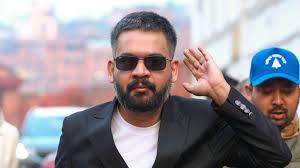

Nepal’s rapper-turned-politician Balendra Shah is set to become the next prime minister after his centrist Rastriya Swatantra Party (RSP) won a commanding majority in parliamentary elections.
His meteoric rise — propelled by anti-establishment sentiment and youth anger over corruption — marks one of the most dramatic shifts in Nepal’s political landscape in decades.
The high-stakes March 5 election came six months after deadly protests that toppled the government, in which at least 77 people were killed.
Just 35, Shah rose from mayor of the capital Kathmandu to defeat veteran four-time prime minister KP Sharma Oli in his own constituency.
But the new government now faces the far harder task of fixing the Himalayan nation’s ailing economy.
Here are the key challenges it will face.
– Keeping promises –
Shah faces the difficult transition from disruptive political outsider to governing leader.
“A serious challenge for the RSP is implementing the promises it has made in its manifesto, given the country’s limited resources, infrastructure, and policy capacity,” political analyst Krishna Khanal told AFP.
“Now the party cannot blame anyone, because it has a majority government. From the day it forms the government, it must go into action.”
BMI analysts, of Fitch Solutions, said the new ruling party “with limited legislative and administrative experience, must navigate deep structural constraints”.
“Shah’s ability to maintain internal cohesion, manage external economic pressures and deliver early wins will help to sustain public confidence,” it added.
“Otherwise, Nepal’s rare short-term political stability will give way to renewed frustration as the gap between political expectation and governing capabilities becomes more apparent.”
– Economy –
RSP’s economic plans are ambitious. It aims to create 1.2 million jobs and more than double per capita income to $3,000 within the next five years, while curbing outflows of Nepalis seeking work abroad.
The equivalent of a third of Nepal’s GDP comes from remittances — including from significant numbers of workers in Gulf nations.
They are impacted by the Middle East war, which will also hit landlocked Nepal’s fuel supplies.
Economist Chandra Mani Adhikari said political stability “will raise the morale of foreign investors”, but warned the financial situation may be worse for the new government than the old.
“The resource gap is the same, or has shrunk, and that presents a challenge,” Adhikari said.
The demonstrations were initially sparked by anger over a brief government ban on social media but were driven by deeper frustration over economic hardship and corruption.
“People have a lot of hope from this party,” said Roman Thapa, 36, a taxi driver in Kathmandu.
“If they don’t work, we’ll face what we did last year.”
– Justice and corruption –
No one has been held accountable for the 77 people killed during the 2025 violence.
The interim government will hand over a report into the killing to the new authorities, and analysts warn that failure to deliver meaningful change could quickly erode goodwill.
Aaditya Rawal, shot in the leg during the protests, wants action taken against “those who misused their power and killed innocent people” during the unrest.
“This will give justice to the families who lost their children,” Rawal said.
The RSP has said it will investigate corruption and prosecute those responsible for violence.
“These promises resonate strongly with young voters, but materialising them requires coherent policymaking and administrative discipline,” BMI added.
– Learn to lead –
Many of RSP’s new lawmakers are entering politics for the first time.
The new government must operate within a bureaucracy shaped by decades of patronage networks and corruption and still influenced by legacy parties.
Shah, better known as Balen, won supporters through his outspoken social media posts. The learning curve from social media star to national leader will be steep.
“Shah has said he will prove himself through action rather than speech, but he should also be publicly accessible and accountable,” Khanal said.
Managing Nepal’s delicate diplomatic balance will be another major test.
“The reality is we have squeezed between two giants — China and India — both of who have been very active in Nepal. They are looking to lure Nepal with their own interests,” added Khanal.
“If you look at Balendra Shah’s nature or behavioural traits, he reacts quickly, and often in an extreme manner, on social media,” Khanal added.
“This could be his biggest challenge once he is in the prime ministerial post and reacts to issues of foreign affairs.”