
Global oil prices have risen sharply due to growing tensions between the United States, Israel, and Iran. Threats to close the Strait of Hormuz have added to market uncertainty. Experts warn that Pakistan’s economy could face serious consequences if the situation continues.
The Pakistan Institute of Development Economics (PIDE), a government think tank under the Ministry of Planning and Development, released a report highlighting the potential economic impact. According to the report, almost 20% of global oil trade passes through the Strait of Hormuz.
The report noted that crude oil prices surged nearly 30% at the beginning of March 2026. Analysts attribute the increase not solely to supply and demand but to a “geopolitical war premium.”
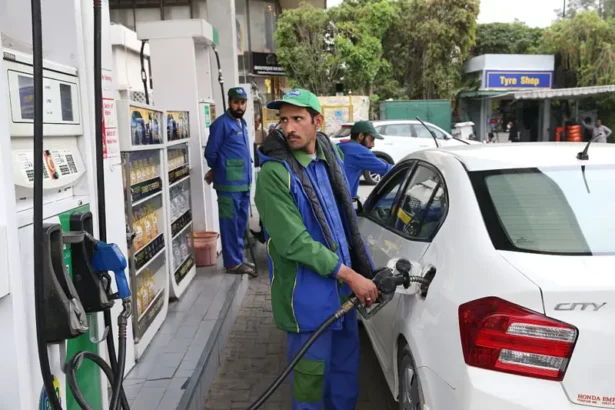
Pakistan depends heavily on imported energy. Petroleum products make up roughly 30% of the country’s total imports. The report explained that for every $10 increase in global oil prices per barrel, Pakistan’s annual oil import bill could rise by $1.8 to $2 billion.
Rising oil prices have an immediate effect on domestic inflation. Transportation costs, food prices, and energy rates are particularly affected. If the Strait of Hormuz remains closed for three months, global crude prices could reach $120–150 per barrel. In that case, Pakistan’s monthly oil import costs could rise to $3.5–4.5 billion. Inflation in the country, recorded at 7% in February 2026, could jump to 15–17%.
The PIDE report stressed that prolonged regional tensions could hinder Pakistan’s economic recovery. The country relies on Gulf oil imports, most of which pass through the Strait of Hormuz. Any disruption in this key route would directly impact Pakistan’s economy.
Discussions are ongoing between Pakistan and Saudi Arabia to establish an alternative supply route through the Red Sea. However, this route has limits. It has lower transport capacity, higher costs, and longer transit times. Experts warn it may serve as a short-term solution but would be expensive.
The report also called for urgent measures to reduce risks. Recommendations include improving strategic oil reserves, exploring alternate supply routes, adopting hedging policies to manage price volatility, and implementing short-term financial strategies to protect the economy.