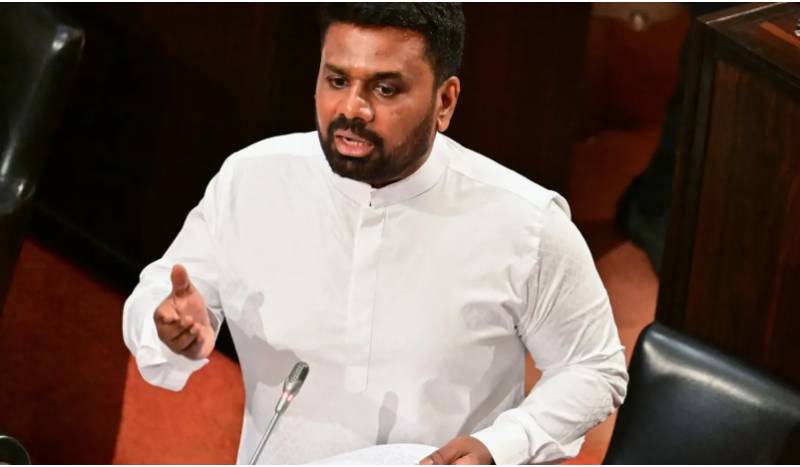

Sri Lanka refused permission to the United States to station two of its warplanes at an airport in the island’s south in early March, President Anura Kumara Dissanayake told parliament on Friday.
“They wanted to bring two warplanes armed with eight anti-ship missiles from a base in Djibouti to the Mattala International Airport from March 4 to 8 and we said ‘no’,” Dissanayake said.
Sri Lanka maintains close ties with the United States, its biggest export market, and Iran which is a key buyer of tea, its main export commodity.
“Certain parties are saying that we have signed agreements with the US, and that’s why we delayed to entertain the Iranian vessel,” Dissanayake said. “It was said in parliament that a delay of 11 hours on our part is what sacrificed the Iranian vessel; That’s outrageous, inhumane.”
“They are saying we are partial. We are impartial. We received the request on February 26 for the 3 Iranian vessels to call at port on a goodwill visit between March 9-13.”
“On the same day evening, the US requested permission for two of its warplanes near Djibouti to land at Mattala airport.
“So there were two pieces of paper on our desk; one asked for permission for the Iranian vessels to call at port between March 9-13, the other from the US asking to allow two naval warplanes to land at Mattala.
“What should we have done? “As a neutral nation we said no to both. That’s impartiality. If we said yes to one party, we would have had to say yes to the other too,” he said before explaining in detail the search and rescue mission for the US-torpedoed Iris Dena crew in keeping with international laws and commitments.
“This is the truth,” he said.
Dissanayake said the agreements signed with the US did not include what the island nation’s stance would be in a war. “The agreements are on aviation cooperation, training on use and maintenance of craft, marine security awareness, cyber security and technology, humanitarian aid and disaster response.”
Responding to criticism over the refusal to allow the Iranian vessels, the President asked what the consequences would have been if permission had been granted. He warned that Sri Lanka’s neutrality would have collapsed, either by appearing to side with one party or by being compelled to grant similar access to the other.
Such a move, he said, would have brought a distant conflict closer to Sri Lanka, potentially involving Mattala International Airport and the Port of Colombo.
“We will not do that,” President Dissanayake said, reiterating that under no pressure would Sri Lanka compromise the neutral stance it has protected.
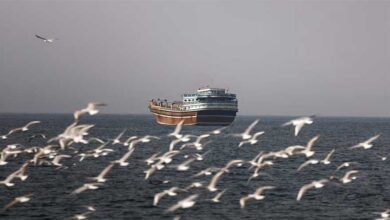
The US torpedoed one of the Iranian ships, IRIS Dena, just off the island’s southern coast on March 4, killing at least 84 sailors. Sri Lanka’s navy rescued 32 survivors.
A second Iranian ship, IRIS Bushehr, was allowed to enter Sri Lankan waters the following day amid fears for the safety of its 219 crew, who have since taken shelter in Colombo.