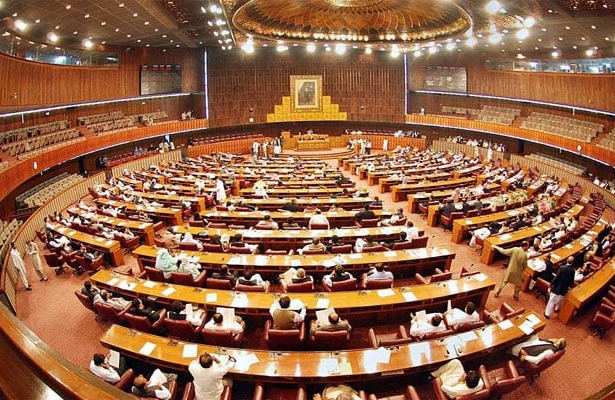

Pakistan’s audit system came under focus in the National Assembly as it was revealed that while hundreds of billions of rupees are being recovered through audit objections, the government still cannot provide a single consolidated figure of total financial irregularities and losses, raising serious questions about transparency and accountability in public finances.
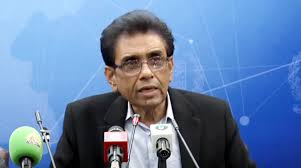
During the Question and Answer session, Finance Minister Senator Muhammad Aurangzeb informed lawmakers that 143 audit reports and appropriation accounts have been prepared and laid before Parliament over the last three years. The breakdown includes 44 reports in 2024–25, 52 in 2023–24, and 47 in 2022–23, reflecting the scale of audit oversight across federal institutions.
However, the most striking disclosure was that the government is unable to present a total figure for financial irregularities, losses, or misappropriations identified in these reports. The minister stated that such figures cannot be consolidated due to their spread across multiple financial years, state owned enterprises, land disputes, and circular debt, leaving lawmakers without a clear picture of the total financial impact.
Despite this, audit recoveries reported by Field Audit Offices show massive figures. In 2022–23, recoveries reached Rs422,520.58 million, followed by Rs210,541.60 million in 2023–24 and Rs222,749.01 million in 2024–25, indicating that large scale financial discrepancies are being identified and partially recovered each year.
Further scrutiny revealed significant tax and customs related irregularities between 2020 and 2025. Audit observations identified Rs28,921 million under the Export Facilitation Scheme, Rs2,913 million in Manufacturing Bonds, Rs951 million in Export Oriented Units, and Rs5,689 million under Duty and Tax Remission for Exports, highlighting systemic gaps in compliance and enforcement.
The Assembly was also informed of serious capacity issues within the tax audit system. The Federal Board of Revenue’s Internal Audit Department has a sanctioned strength of 384 officers but only 220 are currently working, leaving a gap of 164 positions, which lawmakers noted could weaken oversight of revenue collection and compliance.
Officials outlined several measures aimed at strengthening the audit system, including the implementation of the Audit Management Information System (AMIS) to digitize audit processes, and the introduction of performance and impact audits to evaluate efficiency and effectiveness of public spending beyond traditional financial checks.
The government also claimed improvements in transparency, stating that audit reports are now publicly available online in line with international standards, while citizen participatory audits allow the public to suggest areas for scrutiny.
However, lawmakers indicated that despite these reforms, the absence of a consolidated figure for total financial irregularities undermines public accountability. Questions were raised about whether billions in audit observations reflect systemic governance issues rather than isolated cases.
The discussion also covered audits of foreign financial assistance, which officials confirmed are subject to both internal and external oversight, including audits by the Auditor General of Pakistan.