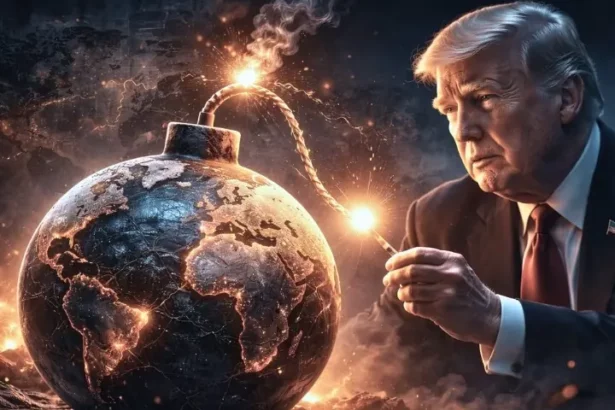

The ongoing tensions involving Iran are increasingly being seen as a turning point for the global order that has shaped international relations for decades. Analysts argue that the world is gradually moving away from a system dominated by military power toward one driven by economic strength, access to critical minerals, advanced technology, and control over key trade routes.
This shift has exposed new realities for the United States, which has long positioned itself as a global superpower. Washington is beginning to recognize that its traditional influence over allies is no longer guaranteed. Instead of responding automatically to American calls, many partner nations now weigh their decisions based on shared economic interests and strategic benefits.
A recent example highlights this change. Former President Donald Trump urged several allied nations to deploy naval forces to protect oil shipments passing through the Strait of Hormuz, a critical artery for global energy supplies. However, the response from these countries remained cautious and noticeably slow. Many governments appeared reluctant to commit military resources without clear legal justification or direct national interest.
Concerns over the legality of potential strikes against Iran by the United States and Israel have further complicated the situation. This uncertainty has made allied nations hesitant to risk military involvement, especially in a conflict that does not directly threaten their own security. Germany’s Defense Minister Boris Pistorius openly reflected this sentiment, emphasizing that the conflict is not Germany’s war and that his country had no role in initiating it.
At the same time, Iran’s strongest international partners—China and Russia—have limited their involvement. Despite their strategic ties with Tehran, both countries have avoided deep engagement in the conflict, signaling a preference for calculated restraint over direct confrontation.
Regional dynamics also reveal a push for stability. Hamas, amid the broader tensions in Gaza, has reportedly advised Iran against escalating the conflict by targeting neighboring Gulf states. The group stressed the importance of preserving regional relationships and encouraged cooperation among countries in the Middle East.
Taken together, these developments illustrate a broader transformation in global politics. Military alliances still matter, but they no longer operate on unquestioned loyalty. Economic interdependence, geopolitical pragmatism, and regional stability are now shaping decisions more than ever before.