
WASHINGTON: US President Donald Trump said in a televised address that the United States has nearly achieved its military goals in Iran, but he did not provide a clear timeline for ending the conflict. He warned that the US would continue military action and vowed to strike Iran hard if necessary.
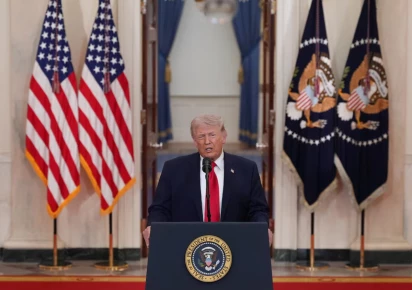
Speaking from the White House, Trump claimed that the US has destroyed Iran’s navy and air force, and severely weakened its ballistic missile and nuclear programs. However, he avoided giving specific details about how or when the war would conclude, saying only that the US would finish the job “very fast.”
Trump’s speech came as Americans grow increasingly concerned about the war’s impact, including rising gasoline prices and economic strain. Public opinion is largely against the conflict, with recent surveys showing a majority want the US to end its involvement quickly, even if it means not achieving all of the administration’s objectives.
During the 19-minute address, Trump described the possibility of further strikes on Iran’s electricity and oil infrastructure if negotiations fail. He said the US would continue hitting Iran “extremely hard over the next two or three weeks” and claimed the country would be brought “back to the Stone Ages.”
The president also addressed concerns over the Strait of Hormuz, a vital oil shipping route that Iran has partially blocked. Trump suggested Gulf countries should take the lead in reopening the strait, while promising US support. He criticized NATO allies for not offering assistance and even hinted at questioning the US’s long-term commitment to the alliance.
Despite claiming Iran has been weakened militarily, the speech highlighted that the conflict is far from over. Air sirens recently sounded in Doha and Tel Aviv, showing that Iran still has the ability to launch strikes across the region. Meanwhile, thousands of additional US troops are moving toward the Gulf, signaling that the US is keeping its military options open.
Trump urged Americans to “keep this conflict in perspective,” comparing it to past long-term wars in Iraq, Vietnam, and Korea. Yet, his address offered little clarity on how or when the war will end, leaving both the public and allies uncertain about the next steps.