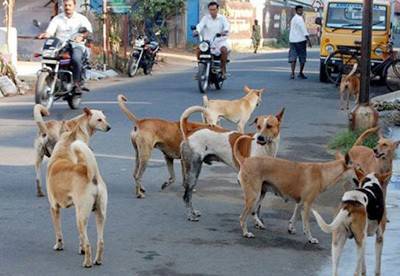

The rising number of dog bite cases across Punjab has prompted judicial intervention, with the Lahore High Court (LHC) seeking concrete measures to control the stray dog population and safeguard human lives.
While hearing a petition related to animal birth control on Thursday, the court called for implementing an effective policy for animal birth control and directed all parties to submit practical and enforceable proposals at the next hearing.
Justice Khalid Ishaq issued the order on a petition filed by the Judicial Activism Panel (JAP).
During the Thursday hearing, the Assistant Advocate General Imran Khan, representing the secretary of the Health and Population Department, submitted detailed reports on dog bite incidents over the past 27 months and the availability of anti-rabies vaccines across the province.
The court was informed that sufficient stocks of anti-rabies vaccine are available, with more than 17,000 doses stored at provincial facilities and over 52,000 at district levels.
The Punjab Health Department has directed all hospitals to maintain minimum stock levels, including 100 doses at district headquarters (DHQs) hospitals, 50 at tehsil headquarters (THQs) hospitals and 20 at rural health centres (RHCs).
According to the report, the administration of anti-rabies vaccines is being carried out in line with World Health Organization (WHO) guidelines.
Special arrangements have been made to ensure vaccine availability in remote and flood-affected areas, while dog bite cases are being monitored on a daily basis.
The provincial government’s report further revealed that from January 2024 to March 26, 2026, a total of 514,589 people fell victim to dog bites in Punjab.
In 2024 alone, 232,704 cases were reported, followed by 243,299 cases in 2025. In the first three months of 2026, 38,586 incidents have already been recorded.
District-wise data showed that Dera Ghazi Khan reported the highest number of cases at 34,293, followed by Rahim Yar Khan with 33,122 and Faisalabad with 32,853 cases. Other heavily affected districts include Muzaffargarh with 29,471 cases, Rajanpur with 27,500 cases and Rawalpindi with 26,586 cases.
Significant numbers were also recorded in Gujranwala with 20,147 cases, Kasur with 19,372 cases, and Lahore, where 18,514 people were affected. Mianwali reported 19,099; Multan, 16,213; Sargodha, 15,746; Sheikhupura, 15,340; Sahiwal, 14,860; Jhang, 12,927; Vehari, 11,405; Chiniot, 11,290; Chakwal, 10,905; Toba Tek Singh, 10,899; and Jhelum, 10,776.
Further figures indicated 9,263 cases in Bahawalpur, 9,112 cases in Mandi Bahauddin, 8,543 in Nankana Sahib, 8,279 in Bahawalnagar, 8,199 in Pakpattan, 7,997 in Attock, 7,898 in Bhakkar, and 7,463 in Khanewal. Narowal saw 6,982 incidents; Sialkot, 6,780; Okara, 6,724; Khushab, 5,887; Layyah, 5,004; and Lodhran, 4,949 cases.
It is pertinent to mention here that India has specific legal frameworks and policies designed to protect and manage stray dogs, primarily focused on humane population control rather than elimination. The Animal Birth Control (ABC) Rules, 2023, framed under the Prevention of Cruelty to Animals Act, 1960, mandate sterilisation and vaccination.